




2026.10.08
The Ultimate Guide to HIFU for 40s: Results, Cost, and Safety
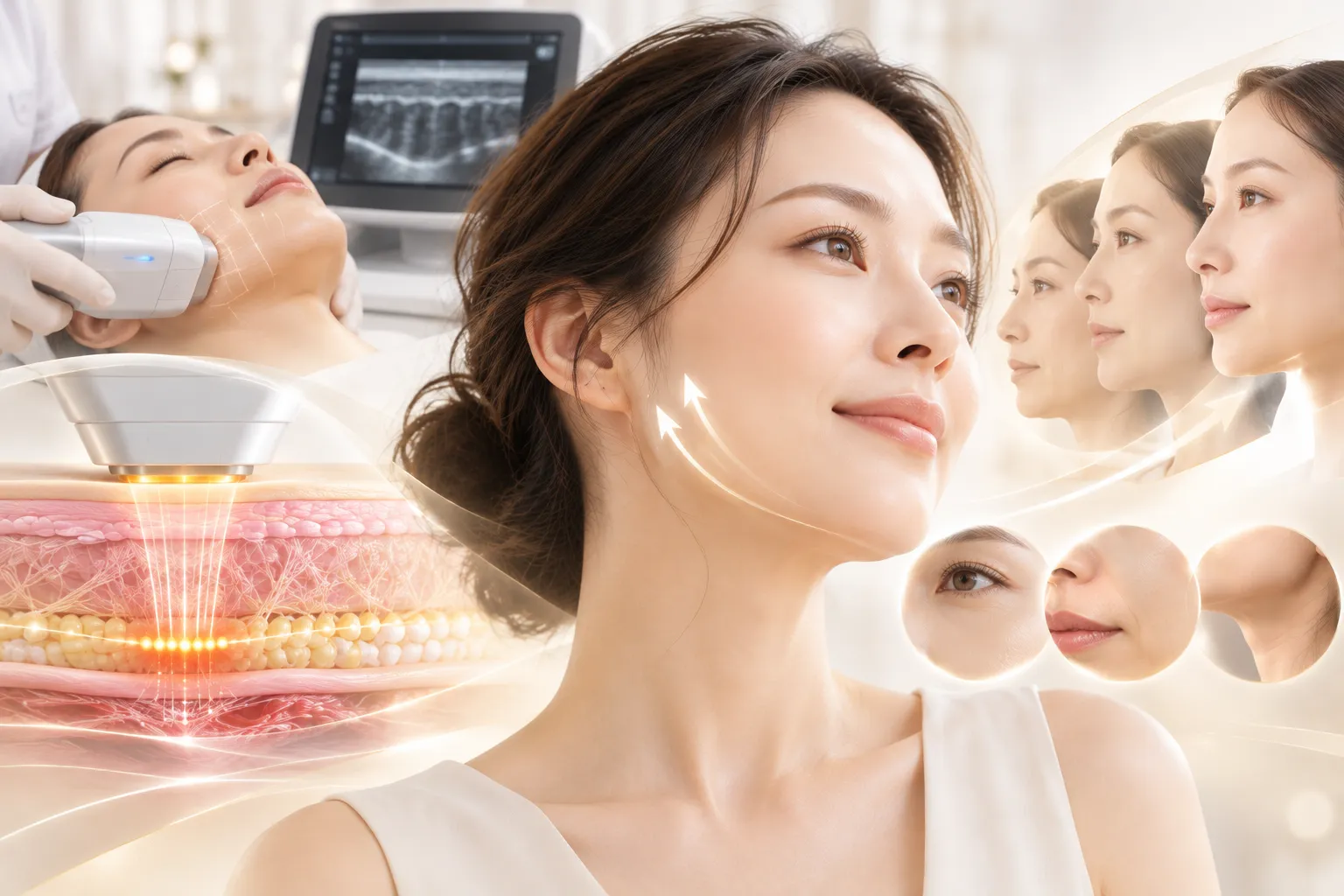
As we navigate our 40s, our skin undergoes subtle but undeniable changes. You might notice that your jawline is no longer as sharp as it once was, or that looking in the mirror reveals a slightly tired expression even after a full night’s sleep. While topical skincare remains essential, it cannot address the deeper structural shifts happening beneath the surface. High-Intensity Focused Ultrasound (HIFU) has become one of the most widely used non-surgical options for those seeking a refreshed, naturally lifted appearance, without the downtime or risks associated with invasive surgery. This comprehensive guide explores how HIFU works, what results are realistically achievable, and how to make an informed, safe decision for your anti-aging journey.
Why HIFU Is a Popular Treatment Option for Sagging Skin in Your 40s
Entering your 40s often brings a noticeable decline in the natural production of collagen and elastin, the crucial proteins responsible for skin elasticity and firmness. This structural decline leads to mild-to-moderate sagging, particularly around the lower face, cheeks, and jawline. For busy professionals and parents, surgical face-lifts are rarely a practical option due to prolonged recovery times and the risk of looking “overdone.” HIFU offers a compelling middle ground. It provides a noticeable, structural lift from within, requiring no incisions, no general anesthesia, and virtually zero downtime. This allows individuals to maintain their active professional and personal lives while gradually revealing a refreshed, more youthful version of themselves.
What is HIFU and How Does It Turn Back the Clock?
High-Intensity Focused Ultrasound is a non-invasive cosmetic procedure that utilizes targeted ultrasound energy to stimulate the deep structural layers of the skin. By focusing ultrasound waves to precise depths, the treatment generates controlled thermal energy beneath the surface. This localized heat initiates a natural healing response, prompting the body to produce fresh, high-quality collagen and contract existing tissues. Unlike lasers or chemical peels that target the superficial skin layers, HIFU penetrates deep into the foundation of the face without damaging the outer epidermal layer, making it both highly effective and exceptionally discreet.
The Science: Targeting the SMAS Layer for a Natural Lift
The true power of HIFU lies in its ability to reach the Superficial Musculoaponeurotic System (SMAS) layer. Located approximately 4.5mm beneath the skin surface, the SMAS is a thin, strong layer of connective tissue and muscle that plastic surgeons physically tighten during a traditional surgical facelift. HIFU is one of the very few non-invasive technologies capable of delivering energy directly to this depth. Using advanced devices like Ultraformer, the treatment applies focused thermal energy at temperatures of 60 to 70 degrees Celsius. This heat causes the SMAS layer to contract instantly, initiating a deep-seated structural lift that serves as the foundation for long-term facial rejuvenation.
Key Benefits of HIFU for Skin in Your 40s
As the skin’s structural support weakens in our 40s, we experience a combination of volume loss, gravity-induced sagging, and superficial texture changes. HIFU addresses these issues simultaneously by working across multiple tissue depths using specialized handpieces.
Lifting and Tightening Sagging Skin
By delivering targeted energy to the deep SMAS layer, HIFU pulls the foundational tissue upward. This deep tightening effect directly counters the downward pull of gravity, lifting sagging cheeks and tightening loose skin on the neck and décolletage for a noticeably firmer silhouette.
Defining the Jawline and Reducing Jowls
One of the earliest signs of aging in your 40s is the softening of the jawline and the accumulation of mild jowls. HIFU treatment helps reshape and contour the lower face. By targeting localized fat deposits and tightening the surrounding tissue, it restores a clean, defined jawline and minimizes the appearance of jowls.
Boosting Collagen for Improved Skin Firmness and Glow
In addition to deep structural lifting, HIFU utilizes shallower handpieces (typically 1.5mm and 3.0mm) to target the dermis. This stimulates rapid collagen and elastin synthesis, improving superficial skin density, smoothing fine lines, and restoring a healthy, youthful glow that topical creams alone cannot achieve.
Realistic Results: What to Expect from HIFU in Your 40s
Managing expectations is key to a satisfying aesthetic journey. HIFU does not produce the drastic, instant changes of a surgical facelift; instead, it offers a gradual, highly natural improvement. People will notice that you look remarkably refreshed, well-rested, and healthy, without realizing you have undergone a cosmetic procedure.
The Treatment Timeline: Immediate Effects vs. Long-Term Results
The visual evolution of a HIFU treatment occurs in two distinct phases:
- Some initial tightening is often visible immediately after the session due to the heat-induced contraction of collagen fibers. There may be minor swelling or a slight plumping effect that temporarily softens lines.
- The true transformation occurs gradually. Over the course of 8 to 12 weeks, the body’s natural collagen synthesis accelerates. You will notice a steady improvement in skin firmness, a more defined jawline, and reduced sagging.
- The rejuvenated structure typically plateaus and remains stable for about 6 months, slowly tapering thereafter. To maintain these results, touch-up sessions are generally recommended every 6 to 12 months.
Before and After: Visualizing the Potential Transformation
When reviewing before-and-after photographs, look for consistent lighting, angles, and expressions. In patients in their 40s, successful HIFU outcomes typically showcase a subtle elevation of the eyebrow line, a reduction in the depth of nasolabial folds, a smoother transition from the cheek to the jaw, and a tighter, less lax neck area. Results vary depending on individual skin thickness, lifestyle factors, and the inherent quality of your collagen production.
Will HIFU Make Sagging Worse? Debunking the Myths
A common concern circulating online is whether HIFU can inadvertently worsen facial sagging or cause a sunken, skeletal appearance. This concern stems from the fact that ultrasound energy can target subcutaneous fat cells. If an inexperienced provider applies excessive energy or uses deep-depth handpieces on areas with very little fat—such as hollow cheeks—it can lead to volume loss, which may accentuate sagging. However, when performed by a highly trained practitioner who carefully assesses your facial structure and avoids hollow areas, HIFU safely tightens tissue without causing unwanted fat volume reduction.
Am I a Good Candidate for HIFU? Who It’s For and Who Should Avoid It
HIFU is highly effective, but it is not a universal solution. Understanding whether your skin profile matches the capabilities of ultrasound technology is essential for ensuring both safety and satisfaction.
Ideal Candidates: Who Will See the Best Results?
The most successful outcomes are typically observed in individuals who meet the following criteria:
- Aged between 35 and 55 with mild-to-moderate skin laxity.
- Noticeable softening of the jawline, early-stage jowls, or mild sagging under the chin.
- Relatively healthy skin with adequate underlying tissue thickness.
- Realistic expectations regarding non-surgical outcomes and a preference for gradual, natural rejuvenation.
When HIFU Might Not Be the Right Choice for You
HIFU may not deliver satisfactory results, or may even be contraindicated, under the following circumstances:
- For individuals with profound sagging or highly redundant skin, surgical intervention or thread lifts may be required to achieve visible results.
- If your primary concern is hollow cheeks or a very thin, depleted fat layer, alternative treatments like RF therapy (e.g., Volnewmer) or dermal fillers may be more appropriate.
- Treatment should be avoided if you have severe sunburn, active cystic acne, open wounds, or active skin inflammation in the target area.
- Individuals with metallic implants in the treatment area, pacemakers, blood disorders, or those who are pregnant should not undergo HIFU.
The HIFU Procedure: A Step-by-Step Walkthrough
Knowing what to expect during your appointment can alleviate any anxiety and help you prepare for a smooth, efficient experience.
Step 1: The Initial Consultation
Your journey begins with a thorough clinical consultation. A qualified practitioner will evaluate your facial anatomy, skin laxity, and subcutaneous fat distribution. They will discuss your aesthetic goals, review your medical history, and customize a treatment plan outlining the appropriate depths and energy levels for your unique facial structure.
Step 2: During the Treatment – What Does It Feel Like?
A single full-face HIFU session typically takes approximately 40 minutes. The procedure involves several distinct steps:
- The skin is thoroughly cleansed of makeup, oil, and impurities.
- A specialized ultrasound gel is applied to the target area to facilitate energy transmission.
- The practitioner precisely glides the HIFU handpiece across the skin, delivering micro-focused ultrasound energy. You may experience a warm, prickling sensation or a deep, dull ache along bony areas like the jawline. While there may be mild discomfort, it is generally tolerable and does not require general anesthesia.
Step 3: Post-Treatment Care and Minimal Downtime
One of the primary advantages of HIFU is the absence of downtime. You can immediately return to your daily routine, apply makeup, and return to work. However, following basic post-treatment guidelines ensures optimal healing:
- Apply high-SPF sunscreen daily to protect the treated skin, which may be temporarily sensitive to UV light.
- Avoid extremely hot baths, saunas, and intense physical exercise for 24 to 48 hours to minimize temporary swelling.
- Maintain a gentle skincare routine, avoiding active acids, retinol, or harsh physical scrubs for several days.
Safety and Side Effects: Understanding the Risks
While HIFU is a widely used, non-invasive procedure supported by clinical studies, it carries potential risks that must be understood to ensure a safe treatment experience.
Common, Temporary Side Effects: Redness, Swelling, and Tenderness
Most side effects are mild and resolve spontaneously within a few days to a week. These include:
- Mild flushing immediately after the session, which typically fades within a few hours.
- Slight puffiness, especially around the cheeks and jawline, which resolves in 2 to 3 days.
- A deep, muscle-ache sensation when pressing on the treated areas, which can persist for approximately 1 week as the deep tissue heals and regenerates.
- Temporary numbness, minor bruising, or very rarely, superficial blisters or nerve irritation if the energy is applied incorrectly.
The Critical Difference: Medical HIFU vs. Esthetic HIFU
It is vital to distinguish between medical-grade HIFU administered in a clinical setting and low-output devices used in beauty salons. Medical HIFU utilizes high-energy, high-precision devices operated by licensed medical professionals. These machines are engineered to safely reach the SMAS layer and deliver reproducible results. Esthetic or salon HIFU devices operate at significantly lower outputs to avoid regulatory restrictions, meaning they rarely reach the necessary depths or temperatures required for true structural lifting, often leading to disappointing results and a higher risk of superficial burns due to poor temperature control.
Minimizing Risks by Choosing a Qualified Professional
The safety and efficacy of HIFU are highly dependent on the skill of the operator. An experienced medical practitioner understands facial anatomy, including the paths of major facial nerves and areas of natural fat distribution. By customizing the depth, spacing, and energy settings for each area of your face, a qualified professional maximizes your aesthetic results while keeping side effects to an absolute minimum.
Breaking Down the Cost of HIFU Treatment
Understanding the financial commitment required for HIFU helps you budget effectively and avoid unexpected expenses.
Average Cost of a HIFU Session and Factors That Influence Price
The cost of a medical HIFU treatment can vary widely based on several factors:
- Clinics in premium urban centers with experienced medical staff generally command higher fees.
- FDA-cleared systems like Ulthera, as well as advanced high-output devices like Ultraformer, typically involve higher per-treatment costs due to equipment standards and cartridge maintenance.
- Spot treatments (e.g., only the jawline or eye area) are more economical, whereas a comprehensive full-face and neck session represents a larger investment.
- For reference, published pricing for a professional HIFU treatment targeting facial sagging often starts around 60,000 yen per session in Japan, though actual prices vary significantly by clinic, device, and treatment area—confirm current pricing directly with the clinic.
How Many Sessions Are Needed and How Often?
Unlike other energy-based therapies that require weekly visits, HIFU is designed for efficiency. A single session is sufficient to trigger the natural collagen regeneration process. To maintain the lifting and contouring effects as natural aging continues, subsequent treatments are generally recommended once every 6 to 12 months, depending on your individual skin response and aesthetic goals.
Is HIFU a Worthwhile Investment for Your Anti-Aging Goals?
When evaluated against alternative options, many find HIFU to be a highly cost-effective investment. Compared to surgical procedures, it avoids hospital fees, anesthesia costs, and lost income from extended work leave. Compared to high-end skincare products that only address the epidermis, HIFU delivers structural changes at the SMAS layer, offering a tangible, long-term return on your aesthetic investment.
HIFU vs. Other Anti-Aging Treatments for Sagging Skin
Navigating the array of clinical anti-aging treatments can be challenging. Comparing HIFU with other popular modalities helps clarify which technology aligns best with your specific skin concerns.
HIFU vs. Radiofrequency (RF)
While both treatments use thermal energy to tighten skin, they utilize different technologies and target different layers:
- Uses focused ultrasound to target deep structural layers (up to 4.5mm at the SMAS layer). It is ideal for lifting sagging tissue, defining the jawline, and reducing mild jowls.
- Uses electrical currents to heat the superficial and deep dermis globally. Devices like Thermage or Volnewmer focus on overall skin tightening, improving skin texture, and volumizing thin, crepey skin. It is often preferred for individuals with low facial fat or hollow cheeks.
HIFU vs. Thread Lifts
Thread lifts involve placing dissolvable surgical sutures under the skin to physically pull and lift sagging tissue.
- Non-invasive, gradual, and carries minimal risk of complications. It is best suited for mild-to-moderate sagging and individuals seeking a completely natural progression.
- Minimally invasive, offering immediate, more dramatic lifting results. However, they carry higher risks of bruising, temporary puckering of the skin, discomfort, and require a few days of social downtime.
HIFU vs. Fillers and Injectables
Injectables and ultrasound energy address aging from two completely different angles:
- Restore lost volume in areas like the cheeks or temples and can soften deep folds instantly by plumping the tissue. They do not, however, tighten the underlying structural layers of the skin.
- Tightens and lifts existing tissue rather than adding artificial volume. It is ideal for individuals who want to avoid looking “puffier” or “filled” and prefer to enhance their natural facial contours.
How to Choose the Right Clinic and Doctor for Your HIFU Treatment
Selecting the right provider is the single most important step in ensuring a safe, effective, and stress-free HIFU experience.
Key Questions to Ask During Your Consultation
To evaluate a clinic’s standards, consider asking the following questions during your initial consultation:
- Which specific HIFU device do you use, and is it a medical-grade system?
- How many HIFU procedures has the practitioner performed, particularly on patients in their 40s?
- How do you customize the depth and energy levels for my specific facial structure to avoid volume loss in hollow areas?
- What is your protocol if I experience unexpected side effects, such as prolonged numbness or nerve irritation?
- Are there any hidden fees, or does the quoted price cover the complete full-face protocol?
Reading Reviews and Checking Credentials
Do not rely solely on promotional materials. Research independent patient reviews, look for consistent before-and-after portfolios taken under standardized lighting, and verify that the medical staff hold valid credentials in dermatology or plastic surgery. A reputable clinic will always prioritize patient safety, offer transparent communication about potential risks, and never pressure you into immediate booking.
Frequently Asked Questions (FAQ)
Below are some of the most common questions individuals in their 40s ask when considering HIFU treatment.
How long do HIFU results really last?
Typically, the visible lifting and tightening effects of a single HIFU session last between 6 to 12 months. Individual longevity depends on lifestyle factors (such as sun exposure, smoking, and sleep quality) and your body’s natural rate of collagen synthesis. Regular maintenance sessions every 6 to 12 months can help sustain these results indefinitely.
Is the HIFU procedure painful?
Pain thresholds vary, but most patients describe the sensation as a deep, warm prickling or a dull, localized ache, particularly when the ultrasound energy passes over bone structures like the jawline or forehead. The discomfort is transient and resolves immediately after the handpiece is lifted. If you are sensitive to pain, discuss options with your clinic, such as adjusting the energy settings or applying a topical numbing cream beforehand.
Can I combine HIFU with other cosmetic treatments?
Yes, combining treatments is a common approach to comprehensive facial rejuvenation. For example, you can pair HIFU (which addresses deep structural sagging) with RF therapy for superficial skin tightening, or with conservative dermal fillers to address localized volume loss. It is crucial, however, to coordinate the timing of these procedures; clinics typically recommend waiting a few weeks between different energy-based treatments or injectables to allow the tissue to fully heal.
Conclusion: Is HIFU the Right Choice for You?
HIFU offers a widely used and convenient option for individuals in their 40s looking to address facial sagging and regain a defined, youthful jawline, without the recovery time associated with surgery. Its safety and effectiveness depend heavily on the practitioner’s skill and each individual’s unique anatomy. By targeting the deep SMAS layer, HIFU stimulates your body’s natural regenerative powers, delivering gradual, beautifully subtle results that align perfectly with an active, professional lifestyle. The key to a successful experience lies in choosing a qualified medical professional who understands your unique anatomy, manages expectations honestly, and prioritizes your long-term skin health. With the right approach, HIFU can help you look as energetic, capable, and refreshed on the outside as you feel on the inside.
監修医師

院長大河原 萌乃
経歴
- 2018
- 杏林大学医学部卒業
- 2018
- 東京女子医科大学病院にて皮膚科、麻酔科、形成外科などを経験
- 2020
- 某大手美容クリニックに入職しレーザー治療、ボトックス注射、ヒアルロン酸注入、また埋没や目の下のくまとり、糸リフトなどの手術も数多く経験
- 2023
- 某大手美容クリニックのスキン院長を歴任
- 2023
- MATSURIKA CLINIC GINZA(茉莉花クリニック銀座) 入職
所属学会
- 日本美容外科学会、日本抗加齢医学学会、日本レーザー医学会、日本医学脱毛学会
- アラガン施注資格認定医
- ジュビダームビスタ認定医
- ジュビダームビスタボリフトXC認定医
- ジュビダームビスタボリューマXC認定医
- ジュビダームビスタボライトXC認定医
- ウルセラ認定医
- サーマクール認定医
