




2026.10.09
HIFU Side Effects: Doctor Explains Risks, Downtime, and Safety
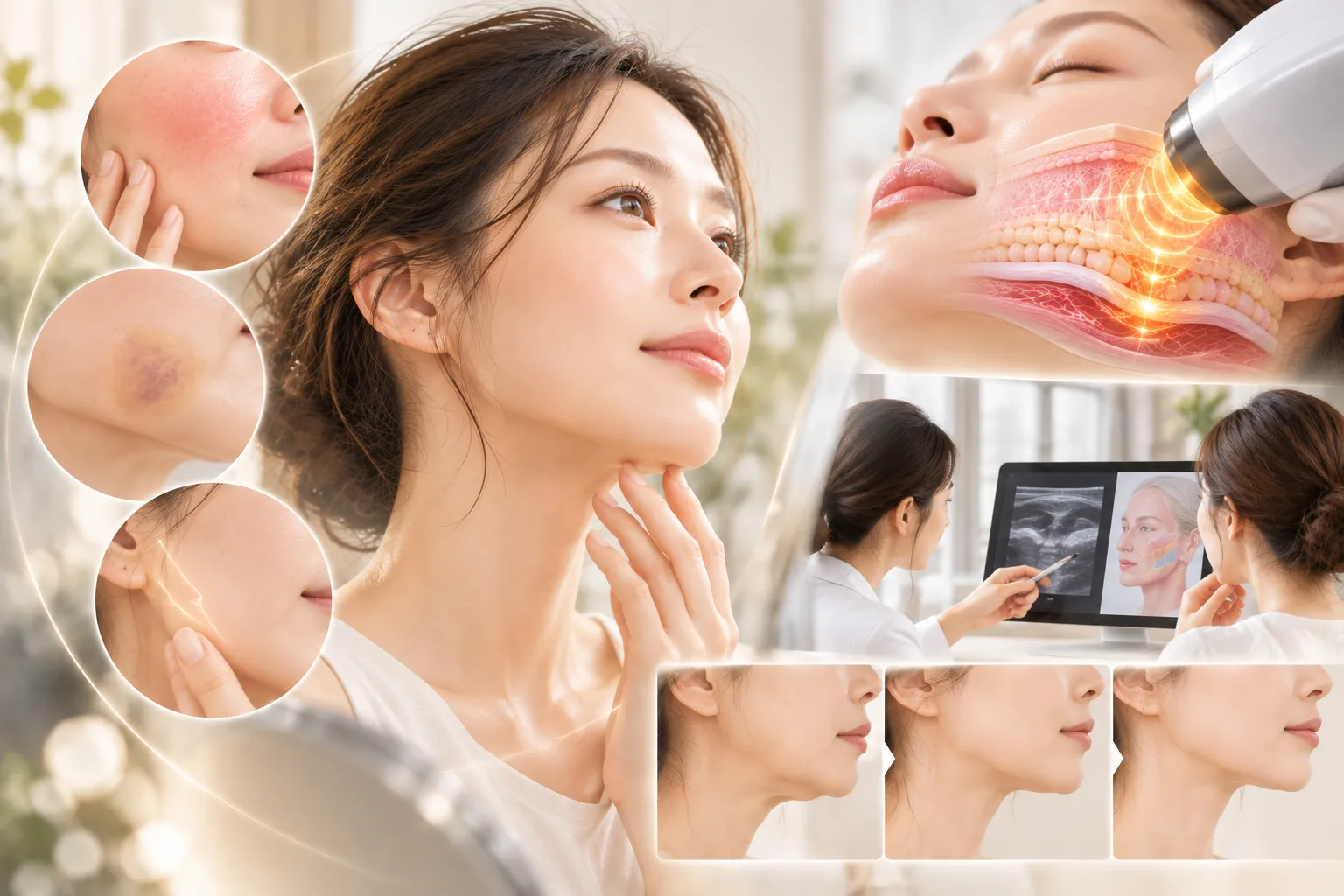
High-Intensity Focused Ultrasound (HIFU) has emerged as a premier non-surgical treatment for lifting and tightening sagging skin. While its rise in popularity is driven by the promise of minimal downtime and subtle, natural-looking rejuvenation, understanding the physiological responses and potential complications is essential for making an informed, safe decision.
What is HIFU and How Does it Target Sagging Skin?
HIFU works by projecting high-frequency sound waves deep into the skin’s structural layers without damaging the outer surface. This targeted delivery allows patients to achieve deep tissue remodeling that was once only possible through surgical intervention.
During a treatment, the HIFU device focuses energy at precise depths—typically 1.5mm, 3.0mm, and 4.5mm. The deepest setting reaches the Superficial Musculoaponeurotic System (SMAS) layer, which is the same muscle-covering membrane tightened during a surgical facelift. By creating microscopic thermal coagulation zones in these deep layers, the tissue undergoes immediate contraction. This controlled thermal stress initiates a multi-month wound-healing cascade, stimulating fibroblasts to synthesize fresh, robust collagen and elastin fibers that gradually firm and lift the face.
Common and Temporary Side Effects: What to Expect
Because HIFU relies on therapeutic heat to stimulate cellular renewal, certain mild and transient side effects are normal physiological responses to the treatment. These effects typically resolve within a few days to a couple of weeks without medical intervention.
Redness, Swelling, and Mild Bruising
The thermal energy delivered to the deep dermis and SMAS layer naturally increases blood circulation and causes local vasodilation. This often manifests as a mild flush or redness immediately after the procedure, similar to a light sunburn. Mild swelling or puffiness may also occur as the body reacts to the localized thermal stimulation, particularly in areas with thinner skin or near the jawline. Occasionally, superficial capillaries may experience minor trauma, leading to tiny pinpoint bruises that resolve quickly.
Tenderness and Soreness in Treated Areas
Many patients report a deep, muscular soreness or tenderness along the jawline, chin, and cheekbones. This sensation is highly comparable to the muscle fatigue felt after a vigorous workout. It indicates that the energy has reached the deeper muscular structures and initiated the healing process. This internal tenderness typically peaks around one week post-treatment and gradually fades over the following fortnight.
Temporary Numbness or Tingling Sensations
As the ultrasound energy heats the structural layers, nearby sensory nerve fibers can experience mild, temporary irritation. This can result in localized numbness, tingling, or a slightly hypersensitive sensation when touching the treated areas. These sensory alterations are transient and typically subside within one to three weeks as the underlying tissue swelling decreases and the nerves recover.
Serious (But Rare) Risks and Complications a Doctor Watches For
While the overall safety profile of medical-grade HIFU is highly favorable, serious complications can arise if the treatment is performed with improper technique, poorly calibrated machinery, or on unsuitable candidates.
Burns and Blisters: The Risk of Improper Technique
If the HIFU transducer is not held flat against the skin or if there is insufficient coupling gel, the ultrasound waves can focus on the skin’s surface rather than the targeted deeper layers. This misdirected energy can cause superficial epidermal burns, resulting in painful blisters, scabs, or linear welts. Proper handpiece placement and continuous contact monitoring are critical to preventing surface thermal injury.
Nerve Injury: Temporary Paralysis or Lasting Damage
The face is home to a complex network of motor and sensory nerves. If high-energy ultrasound pulses are mistakenly delivered directly over major nerve pathways—such as the marginal mandibular nerve along the jaw or the supraorbital nerve near the brow—it can cause nerve bruising (neuropraxia). This can lead to temporary facial asymmetry, a drooping lip, or asymmetric smiling. While these symptoms almost always resolve within several weeks to months as the nerve heals, preventing such injuries requires advanced anatomical knowledge and precise treatment mapping.
Unwanted Fat Loss and Facial Hollowing (‘Cheek Caving’)
At specific depths and high energy levels, ultrasound energy can target and destroy subcutaneous adipocytes (fat cells). While this fat-reducing effect is beneficial for reducing double chins or jowls, applying it incorrectly to the cheeks or temples can lead to unwanted volume loss. This structural hollowing, sometimes referred to as ‘cheek caving’, can inadvertently make a face appear older and more fatigued. Careful selection of cartridge depth and energy output is essential to preserve necessary facial volume.
Hyperpigmentation or Skin Discoloration
In rare instances, the localized inflammatory response triggered by HIFU can stimulate melanocytes to produce excess melanin, leading to post-inflammatory hyperpigmentation (PIH). This risk is higher in individuals with darker skin tones or those who expose their treated skin to UV radiation shortly after the procedure without adequate protection.
Understanding HIFU Downtime: A Week-by-Week Recovery Guide
One of the primary advantages of HIFU is that it requires virtually no traditional downtime, allowing patients to resume their daily professional and social routines immediately after the session.
Immediately After Treatment (0-24 Hours)
Immediately following the procedure, the skin may look slightly flushed and feel tight or warm to the touch. Patients can apply gentle, non-irritating skincare, mineral makeup, and high-SPF broad-spectrum sunscreen right away. It is highly recommended to avoid hot baths, saunas, vigorous exercise, and direct sun exposure during this initial window to prevent exacerbating swelling or redness.
The First Few Days (Day 1-3)
Any surface redness typically fades completely within 24 to 48 hours. Mild, localized swelling may become slightly more noticeable in the mornings, but it is rarely severe enough to attract attention from colleagues or friends. Patients may begin to feel a deep, dull ache when washing their face or chewing, which is a normal sign of tissue contraction.
The First Week and Beyond
By the end of the first week, surface-level signs have fully resolved, and any deep muscular tenderness begins to decline. Skin elasticity gradually improves over the following months as neocollagenesis continues to build, typically peaking between the 3 and 6-month mark, revealing natural-looking lifting and tightening without visible traces of having undergone a cosmetic procedure.
How to Ensure a Safe HIFU Treatment: 4 Key Factors
Achieving safe, elegant, and predictable outcomes with HIFU relies entirely on minimizing clinical variables and choosing high-quality care.
1. Choose a Qualified Medical Professional
HIFU is not a simple beauty facial; it is a medical-grade treatment that alters deep facial structures. Selecting an experienced medical practitioner who possesses deep knowledge of facial anatomy, nerve pathways, and skin physiology is the single most important decision a patient can make to ensure safety and avoid complications.
2. The Dangers of Salon vs. Medical-Grade HIFU
Many non-medical salons offer low-cost HIFU treatments using uncalibrated or counterfeit devices. These salon-grade machines often suffer from unstable energy delivery, either producing insufficient energy (rendering the treatment ineffective) or highly irregular spikes of heat that can cause severe burns and permanent nerve damage. Medical-grade HIFU devices, regulated by health authorities, undergo strict clinical validation to ensure precise energy delivery at exact depths.
3. Importance of a Thorough Pre-Treatment Consultation
A comprehensive consultation is essential to evaluate facial structure, skin thickness, and subcutaneous fat distribution. During this stage, a physician determines if a patient has sufficient facial volume to support the deeper thermal settings or if certain areas must be avoided to prevent hollowing. This step allows for a customized, safe treatment plan tailored to the individual’s unique anatomy.
4. Proper Aftercare to Minimize Complications
Following post-treatment guidelines dramatically reduces the risk of adverse reactions. Patients should focus on maintaining a strong skin barrier by applying hydrating, soothing moisturizers and wearing daily broad-spectrum SPF 30+ sunscreen. Avoiding aggressive active ingredients—such as retinoids, alpha-hydroxy acids (AHAs), and high-strength vitamin C—for at least one week allows the skin to heal undisturbed.
Who Should Avoid HIFU? Contraindications and Poor Candidates
Not every individual is an ideal candidate for HIFU. Understanding who should avoid the procedure is key to preventing unsatisfactory cosmetic results or medical complications.
Individuals with Low Facial Fat
Patients who already possess very lean faces, prominent bone structures, or minimal subcutaneous fat should approach HIFU with caution. Because the treatment can cause mild volume reduction, treating a thin face with deep cartridges can exacerbate an aged or gaunt appearance. For these individuals, alternative therapies that focus purely on dermal thickening may be safer.
Those with Severe Skin Laxity or Sun Damage
HIFU relies on the body’s natural capacity to generate new collagen. In cases of severe, advanced skin sagging or extensive UV damage, the underlying fibroblasts may lack the vitality required to produce a significant lifting response. These patients are often better suited for surgical options or multi-modality treatments combining thread lifts and dermal fillers.
Contraindications: Implants, Active Infections, and Pregnancy
HIFU is strictly contraindicated for individuals with active skin infections, open wounds, cystic acne, or herpes simplex outbreaks in the target area. Additionally, patients with metallic implants, pacemakers, or gold threads in the face or neck must avoid the treatment due to the risk of energy conduction. As a standard safety precaution, HIFU is not performed on pregnant or breastfeeding women.
Doctor’s Answers to Frequently Asked Questions About HIFU Safety
Addressing the common questions and underlying anxieties surrounding non-surgical lifting procedures helps establish realistic expectations and peace of mind.
Can HIFU treatments make my face look older in the long run?
No, when performed correctly by a qualified medical professional. HIFU stimulates natural collagen production, which actually helps preserve skin elasticity and slow down the aging process. However, if an excessive amount of energy is applied to superficial fat layers in an already thin face, the resulting fat loss can create a hollowed look that mimics an aged appearance. This is why proper patient selection and device customization are paramount.
Does HIFU increase the risk of cancer?
There is no clinical evidence linking HIFU to an increased risk of cancer. Ultrasound technology has been safely utilized in diagnostic medicine for many decades. Unlike X-rays or UV light, ultrasound waves do not emit ionizing radiation, meaning they do not alter or damage cellular DNA.
How painful is a HIFU procedure?
Pain levels vary depending on individual pain tolerance, the device used, and the target area. Most patients describe the sensation as a series of brief, deep heat pinches or a dull, electrical aching along the jawbone. While it can be uncomfortable, it is generally tolerable. Clinicians can adjust energy levels or apply topical numbing agents to ensure patient comfort throughout the session.
What are the alternatives if I’m not a good candidate for HIFU?
For individuals who are not suited for HIFU due to low facial fat, radiofrequency (RF) microneedling or RF skin tightening treatments (such as Thermage) offer excellent alternatives that focus on dermal tightening without targeting subcutaneous fat. For those seeking more dramatic lifting, thread lifts or dermal fillers can provide structural support and volume restoration.
Conclusion: Balancing HIFU Benefits with a Realistic View of the Risks
HIFU is widely regarded as a safe and effective non-invasive option for lifting the lower face, defining the jawline, and reducing mild skin laxity, when performed correctly by a qualified provider. By understanding both the normal, temporary side effects and the rare, serious risks associated with improper execution, patients can approach the treatment with clarity and confidence. The key to a successful outcome lies in choosing anatomical expertise and medical-grade technology over convenience, ensuring that your journey to a refreshed appearance is both safe and gratifying.
Schedule a Professional Consultation to Determine if HIFU is Safe for You
Every face is unique, and structural rejuvenation requires a personalized clinical touch. To discover if HIFU is the optimal choice for your specific facial structure and aesthetic goals, we encourage you to book a thorough, doctor-led consultation at a qualified medical aesthetic clinic. A comprehensive anatomical assessment will provide you with a tailored treatment path, ensuring maximum safety, peace of mind, and beautiful, natural-looking results.
監修医師

院長大河原 萌乃
経歴
- 2018
- 杏林大学医学部卒業
- 2018
- 東京女子医科大学病院にて皮膚科、麻酔科、形成外科などを経験
- 2020
- 某大手美容クリニックに入職しレーザー治療、ボトックス注射、ヒアルロン酸注入、また埋没や目の下のくまとり、糸リフトなどの手術も数多く経験
- 2023
- 某大手美容クリニックのスキン院長を歴任
- 2023
- MATSURIKA CLINIC GINZA(茉莉花クリニック銀座) 入職
所属学会
- 日本美容外科学会、日本抗加齢医学学会、日本レーザー医学会、日本医学脱毛学会
- アラガン施注資格認定医
- ジュビダームビスタ認定医
- ジュビダームビスタボリフトXC認定医
- ジュビダームビスタボリューマXC認定医
- ジュビダームビスタボライトXC認定医
- ウルセラ認定医
- サーマクール認定医
