




2026.10.09
Pico Laser Downtime Uncovered: What to Expect from Day 1 to Day 7
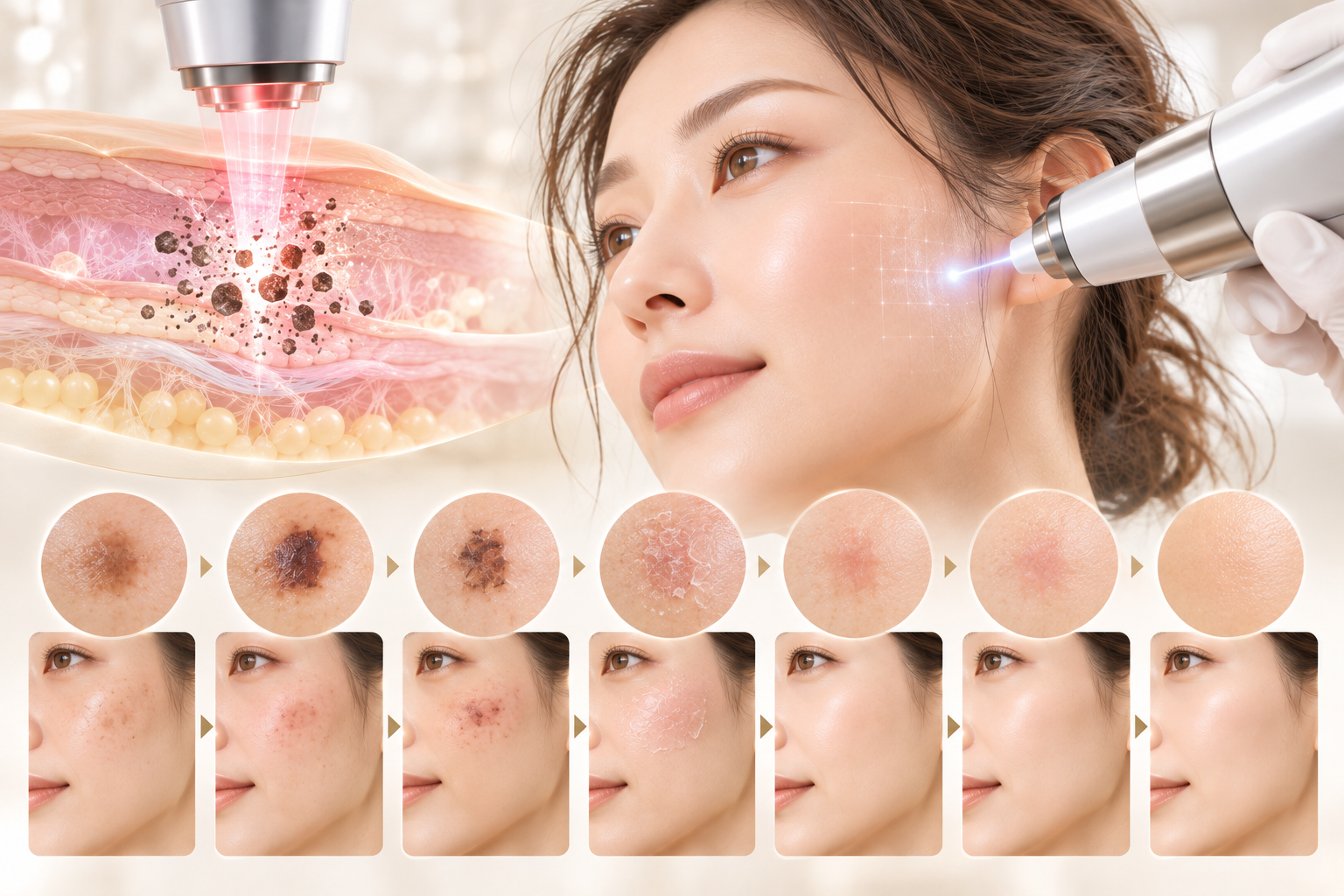
Pico laser treatments have become a popular option for individuals seeking to address skin concerns such as pigmentation, uneven texture, and minor blemishes without extensive recovery periods. For busy professionals and those with active social lives, knowing exactly what to expect during the recovery period is essential for planning sessions around work and personal commitments. This guide provides a detailed breakdown of the Pico laser downtime and healing process.
Understanding Pico Laser Downtime: What Is It and Why Does It Happen?
Before undergoing any cosmetic procedure, it is helpful to understand the biological mechanisms behind the treatment and why your skin reacts the way it does.
Pico laser technology delivers ultra-short pulses of laser energy to target specific pigments or stimulate skin renewal. This rapid delivery creates a photoacoustic effect rather than relying solely on thermal energy, which minimizes heat-induced damage to the surrounding tissues.
Downtime refers to the period during which visible signs of healing, such as redness, mild swelling, or temporary scabbing, are present on the skin. These reactions occur because the laser energy breaks down excess melanin or creates microscopic treatment zones within the dermal layers to trigger the skin’s natural repair mechanisms. While the treatment is designed to minimize overall tissue disruption, these temporary changes are a normal part of the physiological response to laser exposure.
A Day-by-Day Guide to Pico Laser Recovery (Day 1 to Day 7 and Beyond)
The healing journey after a Pico laser session is generally predictable, though individual responses can vary based on skin type and the specific treatment settings used.
Having a clear timeline of the post-treatment phase allows you to plan your work meetings, social events, and daily routines with confidence.
Note that the scabbing pattern described below mainly reflects pigment-targeted treatments such as Pico Spot. If you received Pico Toning or Pico Fractional, your downtime may look quite different — see the “Pico Laser Downtime by Treatment Mode” section for details specific to your treatment.
Day 0: Immediately After Treatment
Immediately following the procedure, the treated areas typically display redness and mild swelling, resembling a moderate sunburn. Some patients may also experience a warm, tingling sensation. Depending on the laser mode used, specific pigmented lesions may temporarily turn whitish or slightly darker. These initial reactions are normal physiological responses to the energy delivered to the skin.
Day 1-2: The Initial Healing Phase
During the first 24 to 48 hours, the redness and warmth generally begin to subside, although mild swelling may persist around sensitive areas. The skin may feel dry or tight. For targeted spot treatments, the pigmented areas often start to darken and may begin to form thin, superficial crusts or micro-scabs. It is crucial during this stage to avoid touching, scratching, or irritating the face.
Day 3-7: Scabbing and Peeling
Between days three and seven, any micro-scabs or dark spots formed during the treatment will gradually rise to the surface of the skin and begin to flake off naturally. This peeling process is a sign of epidermal turnover. It is essential to let these scabs shed on their own without picking at them, as premature removal can lead to scarring or prolonged redness. By the seventh day, most of the surface flaking typically resolves, revealing newer skin underneath.
Week 2 and Beyond: Post-Scab Healing and PIH Risk
After the first week, the skin generally looks much clearer, though newly revealed areas may still show a light pinkish hue. During this time, the skin remains sensitive to ultraviolet radiation. There is a temporary risk of developing Post-Inflammatory Hyperpigmentation (PIH), which is a darkening of the skin caused by sun exposure or improper post-care. Continuous sun protection and gentle skincare are vital during this phase to help support the best possible results.
Pico Laser Downtime by Treatment Mode: What to Expect
Pico laser treatments are highly versatile and can be adjusted using different handpieces and energy settings. The length and characteristics of your downtime depend significantly on the specific treatment mode selected for your skin concerns.
Understanding these differences helps in selecting the right timing for your session based on your personal and professional schedule.
Pico Spot: For Targeted Blemishes (e.g., Sun Spots, Freckles)
Pico Spot treatments target specific, individual pigmented lesions like sun spots and freckles. Because this mode delivers concentrated energy directly to the targeted spots, it typically results in the formation of distinct micro-scabs. The downtime for Pico Spot is localized, with the dark scabs remaining visible for approximately five to seven days before flaking off.
Pico Toning: For Overall Brightening and Melasma
Pico Toning utilizes lower energy levels spread evenly across the entire face to address overall skin tone issues, general dullness, and sensitive conditions like melasma. This gentle approach generally involves minimal to no downtime. Patients may experience mild redness that typically subsides within a few hours to a day, making it highly suitable for those who cannot accommodate visible recovery periods. While Pico Toning is generally gentle, melasma can be sensitive to treatment intensity — overly aggressive settings may occasionally trigger a temporary flare or rebound darkening, so treatment parameters should be carefully individualized by your provider.
Pico Fractional: For Texture, Pores, and Acne Scars
Pico Fractional treatments use a specialized lens to focus the laser energy into microscopic treatment zones, creating tiny areas of localized tissue response beneath the surface. This process stimulates collagen and elastin production. The downtime for Pico Fractional usually involves moderate redness, mild swelling, and a textured feel to the skin, which typically resolves within three to five days.
Essential Aftercare: How to Manage Your Downtime for the Best Results
Appropriate post-treatment care plays a critical role in supporting the skin’s natural healing process and preventing unnecessary complications.
Following professional guidance helps maintain a healthy skin barrier and supports the treatment in delivering its intended benefits smoothly.
Protecting Your Skin: The Importance of Sunscreen
Post-laser skin is highly vulnerable to UV damage, which can lead to hyperpigmentation. Applying a broad-spectrum sunscreen with an appropriate SPF daily is non-negotiable. It is advisable to choose physical sunscreens containing zinc oxide or titanium dioxide, as they are generally less irritating to recovering skin. Sunscreen should be reapplied regularly if spending time outdoors.
Keeping Skin Hydrated: Moisturizing Best Practices
Laser treatments can temporarily compromise the skin’s moisture barrier, leading to dryness and flaking. Keeping the skin adequately hydrated helps soothe irritation and supports cell renewal. Medical professionals often recommend using mild, fragrance-free moisturizers or gentle barrier creams. Avoid products containing active ingredients like retinol, vitamin C, or exfoliating acids until the skin is fully healed.
How to Cleanse Your Face Gently
When washing your face during the recovery period, use lukewarm water and a very mild, non-foaming, or low-foaming cleanser. Avoid harsh scrubbing, mechanical exfoliating brushes, or textured washcloths. Gently pat the skin dry with a clean, soft towel instead of rubbing.
When Can I Wear Makeup? Tips for Concealing Redness
In most cases, it is best to avoid applying makeup for at least 24 hours after the treatment to allow the skin’s surface to close. Once the initial redness has stabilized and no open skin remains, mineral-based makeup can be used to gently conceal pinkness or dark spots. Ensure that application tools, such as brushes and sponges, are clean to prevent irritation.
Lifestyle During Downtime: What to Do and What to Avoid
Your daily habits and lifestyle choices during the recovery phase can influence how quickly and smoothly your skin heals.
Making temporary adjustments to your routine helps avoid unexpected side effects and ensures a comfortable recovery.
Exercise, Saunas, and Hot Baths
It is generally recommended to avoid strenuous exercise, saunas, steam rooms, and hot baths for the first 24 to 48 hours. Activities that cause excessive sweating or increase body temperature can exacerbate swelling, prolong redness, and increase the risk of skin irritation in the treated areas.
Alcohol Consumption
Avoiding alcohol for a few days post-treatment is often suggested, as alcohol can dilate blood vessels, potentially worsening redness and swelling. Staying well-hydrated with water supports the body’s general healing mechanisms.
Returning to Work and Social Activities
Many individuals can return to work and light social activities the day after treatment, especially if they underwent Pico Toning or localized Pico Spot treatments that can be covered with protective tape or makeup. For treatments that cause more visible redness, scheduling the session before a weekend or during a quiet period at work can provide peace of mind.
Potential Side Effects to Watch For
While Pico laser treatments are widely performed, like any medical aesthetic procedure, they carry potential risks and side effects that patients should be aware of.
Understanding these possibilities helps you distinguish between normal healing and issues that require professional attention.
Common and Temporary Reactions
The most common reactions include temporary redness, mild swelling, itching, and dry, peeling skin. These are normal signs of the skin renewing itself and typically resolve within a week without medical intervention.
Post-Inflammatory Hyperpigmentation (PIH)
Post-Inflammatory Hyperpigmentation (PIH) is a temporary darkening of the skin that can occur after inflammatory skin conditions or aesthetic treatments, particularly in individuals with darker skin tones or those exposed to sunlight without proper protection. Following strict UV protection protocols greatly reduces this risk.
When to Contact Your Clinic
While severe complications are rare, you should contact your treating medical institution if you experience unusual symptoms. These include persistent or worsening pain, signs of infection (such as pus or localized warmth), severe blistering, or prolonged redness that does not improve after several weeks.
Frequently Asked Questions (FAQ) about Pico Laser Downtime
Here are answers to some of the most common questions patients ask when planning their Pico laser treatment and recovery.
How long does the scab take to fall off after Pico Spot?
Scabs formed after a Pico Spot treatment generally take about five to seven days to naturally flake off. It is important not to pick or peel them off prematurely, as this can lead to scarring or uneven pigmentation.
Can I go to work the day after Pico laser treatment?
Yes, many patients return to work the following day. For milder treatments like Pico Toning, there is virtually no disruption. For treatments like Pico Spot or Pico Fractional, some redness or visible scabbing may be present, which can often be managed with protective tape or mineral makeup, depending on your provider’s guidance.
Is it okay to skip using the protective tape?
If your provider applies or prescribes protective tape over treated areas, it is highly recommended to keep it on as directed. The tape protects the delicate, healing skin from friction, UV exposure, and environmental contaminants, reducing the risk of hyperpigmentation and supporting optimal healing.
Why do some people get scabs and others don’t?
Scabbing depends on the treatment mode and settings used. Pico Spot treatments targeting specific pigments concentrated in the upper layers of skin typically result in scabs. In contrast, Pico Toning, which uses lower energy to treat overall skin tone, rarely causes scabbing.
Will the pinkness of the skin after the scab falls off disappear?
Yes, the pinkish hue left behind after a scab naturally sheds is a normal sign of newly formed skin. This pinkness generally fades gradually over several weeks, returning to your normal skin tone, provided the area is protected from sun exposure.
Conclusion: Planning Your Pico Laser Treatment with Confidence
Pico laser treatments offer a versatile and customizable approach to addressing various skin concerns with manageable recovery periods.
By understanding the typical day-by-day healing process, choosing the appropriate treatment mode for your lifestyle, and adhering to strict post-treatment care instructions, you can smoothly navigate the downtime. Always consult with a qualified medical professional at a registered medical institution to receive a personalized treatment plan tailored to your unique skin type and individual goals. Note that Pico laser treatments are generally classified as non-insured private practices (自由診療), and the exact number of sessions, overall costs, and recovery experiences will vary depending on individual skin conditions and the medical institution you choose. Common risks include redness, temporary swelling, scabbing, and changes in pigmentation.
監修医師

院長大河原 萌乃
経歴
- 2018
- 杏林大学医学部卒業
- 2018
- 東京女子医科大学病院にて皮膚科、麻酔科、形成外科などを経験
- 2020
- 某大手美容クリニックに入職しレーザー治療、ボトックス注射、ヒアルロン酸注入、また埋没や目の下のくまとり、糸リフトなどの手術も数多く経験
- 2023
- 某大手美容クリニックのスキン院長を歴任
- 2023
- MATSURIKA CLINIC GINZA(茉莉花クリニック銀座) 入職
所属学会
- 日本美容外科学会、日本抗加齢医学学会、日本レーザー医学会、日本医学脱毛学会
- アラガン施注資格認定医
- ジュビダームビスタ認定医
- ジュビダームビスタボリフトXC認定医
- ジュビダームビスタボリューマXC認定医
- ジュビダームビスタボライトXC認定医
- ウルセラ認定医
- サーマクール認定医
