



2026.10.14
Ultherapy Pain Management: Anesthesia Options and Questions to Ask
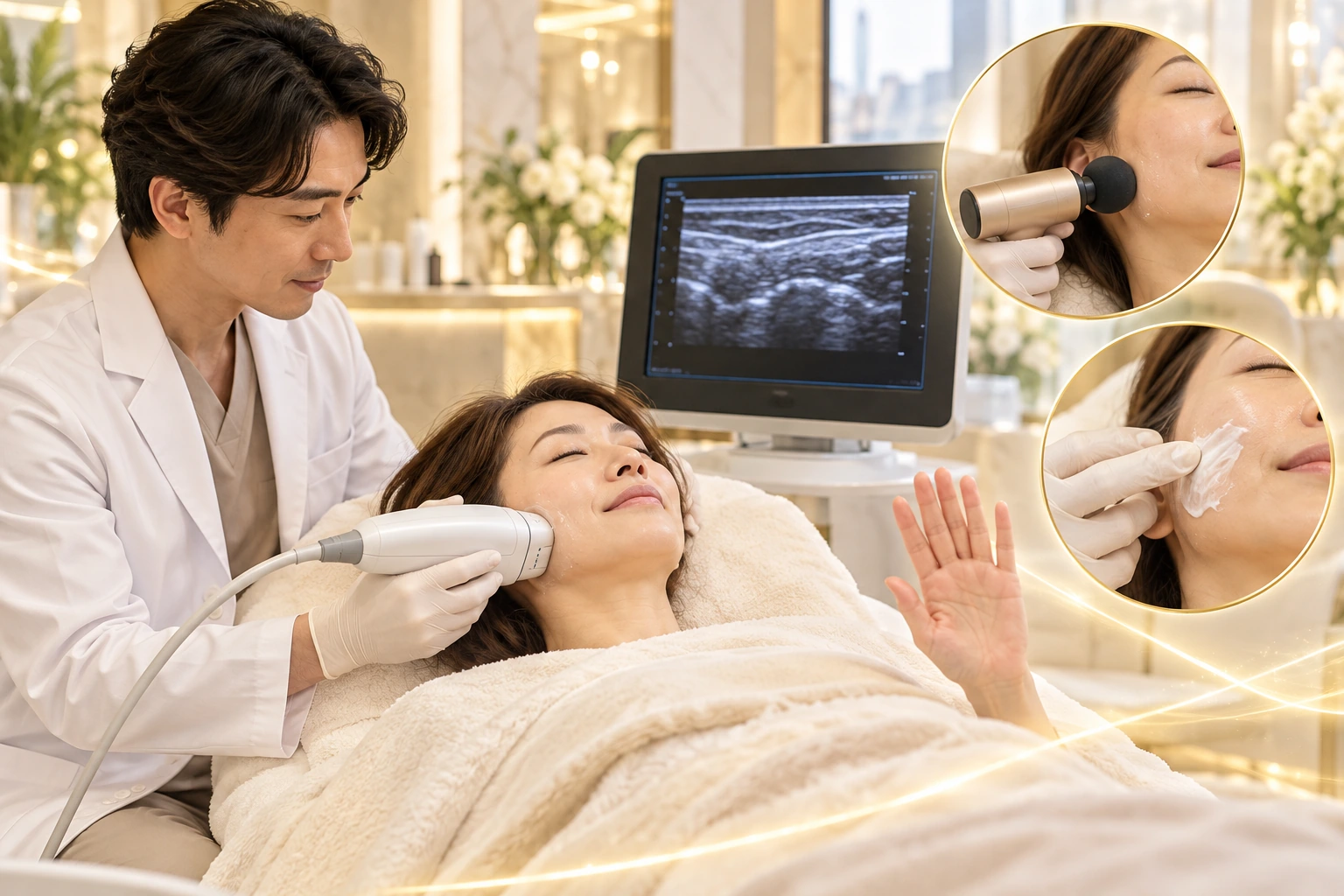
Ultherapy can be uncomfortable, and many people want to know how painful it will be before booking. The honest answer is that it depends on the treatment area, the depth being treated, the settings and your own sensitivity.
Pain during Ultherapy can usually be reduced, but no method can guarantee a pain-free treatment. What helps most is knowing which pain management options are available, what each costs, what precautions apply and how to communicate during treatment.
This guide explains what affects pain during Ultherapy and Ultherapy PRIME, which options to discuss at MATSURIKA CLINIC GINZA in Tokyo, how to communicate during treatment and when to contact us afterward.
What Can Affect Pain During Ultherapy?
Ultherapy delivers high-intensity focused ultrasound (HIFU) to selected depths beneath the skin. The heat created at these points is what causes discomfort, so anything that changes where and how energy is delivered can change how treatment feels.
Treatment Area, Settings and Individual Sensitivity
Patients commonly describe a feeling of heat, a tingling or prickling sensation, or a sensation that seems to resonate against the bone. These sensations tend to vary by:
- Area: areas where bone lies close to the skin, such as along the jawline and around the mouth, often feel more intense.
- Depth: deeper and shallower settings can produce different sensations. At our clinic, Ultherapy plans use 3.0 mm and 4.5 mm depths.
- Shot count and distribution: plans with more shots take longer, and the areas that receive more shots may feel more sensitive.
- Individual factors: pain tolerance, anxiety and the amount of tissue over the bone vary from person to person.
Information to Share Before Treatment
Before treatment, tell your physician:
- Whether you have had HIFU before and how it felt
- Any allergy to anesthetic agents or other medicines
- Current medications, including anticoagulant or antiplatelet medication
- Medical conditions, such as heart disease, diabetes, epilepsy or an autoimmune disease
- Recent cosmetic treatments, including those performed outside Japan
For safety, we are unable to provide treatment if you have received a skin treatment, including laser treatment, at another medical institution within the past month, HIFU or radiofrequency (RF) treatment within the past three months, or significant sun exposure or sunburn within the past month. Ultherapy is not performed if you have received hyaluronic acid injections in the treatment area within the past six months or Botox injections in the treatment area within the past month. Please disclose your full medical history before treatment.
Discussing Pain Management and Anesthesia Options
Pain management is most helpful when it is planned before treatment begins. Ask which options can be used for your plan and treatment area, and what each one costs.
Pain Management Options at MATSURIKA CLINIC GINZA
During Ultherapy and Ultherapy PRIME, we use a massage gun to provide vibration stimulation, which can reduce how strongly pain is felt. Our price list also includes the following anesthesia options:
| Option | Fee (JPY, tax included) |
|---|---|
| Topical anesthesia | ¥3,300 |
| Penless tape (lidocaine patch) | ¥2,750 |
| Nerve block anesthesia | ¥5,000 |
| Laughing gas (nitrous oxide) | ¥6,600 for 30 minutes, ¥13,200 for 60 minutes, ¥17,800 for 90 minutes, ¥20,000 for 120 minutes |
Not every option is suitable for every treatment area or patient. Your physician will explain which options can be used with your Ultherapy plan, how each one works and what it may not relieve.
Precautions, Consent and Additional Fees
Each anesthesia option has its own precautions. Topical anesthesia and patches numb the skin surface but may not reduce deeper sensations as much. A nerve block involves an injection and may cause temporary numbness beyond the treatment area. Laughing gas affects how you feel during treatment, and its suitability depends on your health. Before choosing, ask:
- How the option works and how long it lasts
- What side effects or precautions apply to you
- Whether it affects how you can communicate during treatment
- The additional fee and whether it is included in your estimate
Anesthesia fees are charged in addition to the treatment fee. Your physician will explain the option before you consent to it.
How to Communicate During Treatment
Clear communication helps the treatment team respond to your discomfort. Agree on how you will communicate before treatment starts.
Agreeing on How to Request a Pause
Before the first shot, agree with your physician on how to signal that you need a short pause, such as raising a hand or saying a simple word. This is especially useful if you are communicating in English or using a translation tool. Tell us right away if the sensation changes suddenly, for example if you feel sharp pain or an unusual sensation that spreads.
Discussing Adjustments With the Treatment Team
Our physician checks how you are feeling while treating. If discomfort becomes difficult to tolerate, tell the team. Your physician can explain which adjustments are possible within your plan and how they may affect the treatment. Ultherapy takes approximately 30 minutes to 1 hour, depending on the area and shot count.
After-Treatment Symptoms and Contact Instructions
Some discomfort or tenderness can continue after treatment. Knowing what is expected, and what is not, helps you decide when to contact us.
Our Aftercare Guidance
You can return to your normal routine on the day of treatment. You can wash your face, bathe and apply makeup, but avoid rubbing the treated skin. Activities that increase blood flow or raise your body temperature may make redness or swelling more noticeable, so we recommend avoiding them for 2–3 days. Moisturize and protect your skin from the sun. Wait 2 weeks before light-based or laser treatment.
Potential risks and side effects include redness, swelling, tenderness similar to bruising, mild bruising, tingling or discomfort when touched, and temporary changes in sensation, such as numbness, as well as temporary nerve-related symptoms. Burns are also possible with energy-based treatment. Redness usually settles within a few hours to a few days, and other symptoms usually settle within a few days to a few weeks.
Knowing When and How to Ask for Advice
Contact us if symptoms do not improve as expected, if numbness or weakness in facial movement concerns you, or if you notice blistering or changes in skin color. If you have questions or concerns after returning home, you can contact MATSURIKA CLINIC GINZA by email or LINE. If you have symptoms that may need urgent care, such as severe pain, sudden swelling, bleeding, fever or signs of an allergic reaction, seek medical care promptly at a local healthcare facility.
Questions About Ultherapy Pain Management
These questions can help you prepare for your consultation.
1. Does anesthesia guarantee a pain-free treatment?
No. Anesthesia and vibration can reduce discomfort, but some sensation usually remains because the ultrasound heats tissue beneath the skin. How much you feel depends on the area, depth, settings and your sensitivity.
2. What should I ask before choosing an anesthesia option?
Ask how the option works, whether it suits your health and treatment area, what side effects apply, whether it affects communication during treatment, and what it costs. Confirm that the fee is included in your estimate before you consent.
3. Which areas tend to be most uncomfortable?
Areas where bone is close to the skin, such as the jawline and around the mouth, often feel more intense. Sensitivity varies from person to person, so tell your physician which areas concern you before treatment starts.
4. Is Ultherapy PRIME less painful than conventional Ultherapy?
Not necessarily. Ultherapy PRIME is an updated system with real-time ultrasound imaging, but discomfort still depends on the area, depth and settings, and we cannot promise that it will feel less painful for you. Ask your physician about pain management for either system.
5. How much does Ultherapy cost, and are anesthesia fees included?
Physician-performed Ultherapy for the full face including under the chin costs ¥252,560 for 348 shots and ¥315,700 for 464 shots. Ultherapy PRIME costs ¥277,820 and ¥347,270 for the same plans. All prices are in Japanese yen and include tax. Anesthesia options, such as nerve block anesthesia at ¥5,000, are charged separately.
Summary: Planning Pain Management for Ultherapy
Ultherapy can cause heat, prickling or a deep ache, and the intensity depends on the area, depth, settings and your sensitivity. Pain can usually be reduced, but it cannot be eliminated with certainty.
Before treatment, share your history and concerns, ask which anesthesia options can be used for your plan and what they cost, and agree on how to request a pause. At MATSURIKA CLINIC GINZA, we use a massage gun during Ultherapy and explain the anesthesia options and precautions that apply to you. The full fee table is available on our English price list. Cosmetic treatment at our clinic is self-pay and is not covered by Japanese public health insurance, and consultation and examination without treatment cost ¥11,000 (tax included).
Regulatory information: Ultherapy and Ultherapy PRIME are FDA-cleared in the United States for their respective cleared uses. FDA clearance does not mean that every treatment purpose has been cleared and does not constitute approval in Japan. The Ultherapy and Ultherapy PRIME devices used at our clinic have not been approved under Japan’s Pharmaceuticals and Medical Devices Act. Ultherapy is obtained through JMEC Co., Ltd., and Ultherapy PRIME through Cynosure Japan / Syneron Candela K.K.
We have English-speaking physicians and staff, and we can use translation tools to support communication. Patients who do not speak English or Japanese are encouraged to attend with a professional medical interpreter, who should bring documentation of their credentials. If you need language support, please book through the dedicated option for non-Japanese speakers. We allocate additional consultation time for these appointments, and some fees differ from standard pricing.
To discuss pain management for Ultherapy, book a consultation with MATSURIKA CLINIC GINZA.
References and Official Sources
- MATSURIKA CLINIC GINZA Ultherapy (HIFU): pain management, precautions and regulatory disclosure
- MATSURIKA CLINIC GINZA Ultherapy PRIME (HIFU): device features, precautions and regulatory disclosure
- MATSURIKA CLINIC GINZA English price list: fees, anesthesia options and consultation fee as of October 2026
- American Med Spa Association: Ultherapy PRIME FDA clearance update (November 2025): U.S. cleared indications
- American Society for Dermatologic Surgery. Non-invasive skin tightening treatments: overview of non-invasive skin tightening
Medical Supervisor

Director
MOENO OKAWARA
Biography
- 2018
- Graduated from Kyorin University School of Medicine
- 2018
- Experienced dermatology, anesthesiology, and plastic surgery at Tokyo Women’s Medical University Hospital.
- 2020
- After joining a major beauty clinic, she gained a lot of experience in laser treatments, Botox injections, hyaluronic acid injections, as well as surgery such as sutures, under-eye bags, and thread lifts.
- 2023
- Former skin director of a major beauty clinic
- 2023
- Joined MATSURIKA CLINIC GINZA
Affiliated academic societies
- Japan Society of Aesthetic Plastic Surgery, Japan Society of Anti-Aging Medicine, Japan Society for Laser Medicine, Japan Society for Medical Hair Removal
- Allergan prescription certified doctor
- Juvederm Vista Certified Doctor
- Juvederm Vistabolift XC Certified Doctor
- Juvederm Vista Voluma XC Certified Doctor
- Juvederm Vistarolite XC Certified Doctor
- Ulthera certified doctor
- Thermage certified doctor
