




2026.08.17
Ulthera vs. Ultherapy PRIME® — What’s the Difference? Results, Pain & Pricing Compared
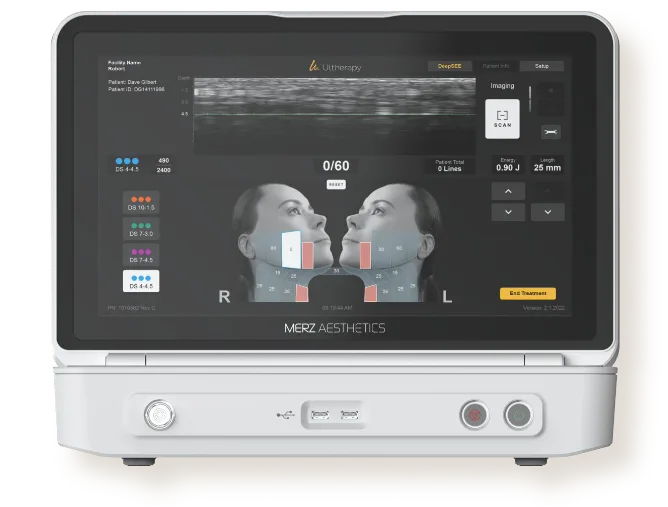
As we age, many of us start to notice sagging cheeks and a less-defined jawline. For those who want effective, natural-looking rejuvenation without the commitment of surgical facelift, the FDA-cleared medical HIFU (High-Intensity Focused Ultrasound) device Ulthera has long been a trusted choice. Now, the next-generation system Ultherapy PRIME® has arrived, attracting significant attention. What exactly sets the two apart, and which is right for you? This article compares both systems across four key dimensions: results, pain, pricing, and safety.
What Are Ulthera and Ultherapy PRIME®? A Primer on Skin-Tightening Treatment
Understanding the fundamentals of Ulthera is an essential first step for anyone considering sagging-skin treatment. Here we break down how each system works.
What Is Ulthera? Why It Remains a Leading HIFU Device
Ulthera is a medical aesthetic device that uses High-Intensity Focused Ultrasound (HIFU) to deliver real lifting results — without any incisions. It bypasses the skin surface entirely, targeting thermal energy precisely at the SMAS (Superficial Musculoaponeurotic System), the deepest layer responsible for facial sagging. Ulthera was the world’s first device to receive FDA clearance specifically for a non-invasive “lifting” indication, and its extensive clinical track record has kept it at the forefront of non-surgical lifting treatments for years.
What Is Ultherapy PRIME®? The First Major Upgrade in 16 Years
Ultherapy PRIME® is the latest-generation medical HIFU system from the Ulthera brand, which received FDA 510(k) clearance in 2024. The new platform features an updated control unit, enhanced software, and refined treatment protocols — delivering more comfortable, more precise, and more personalised treatments than its predecessor.
Side-by-Side Comparison: 3 Key Advances of Ultherapy PRIME®
Here we compare Ulthera and Ultherapy PRIME® across three dimensions that matter most to patients.
Quick Comparison Overview
The main differences between the classic Ulthera system and the latest Ultherapy PRIME® are summarised below.
· Treatment depth: Both systems use the same clinically validated multi-layer approach (1.5 mm, 3.0 mm, 4.5 mm), with the PRIME® system offering improved depth accuracy.
· Treatment speed: System-level optimisation and a refined treatment sequence have increased overall efficiency.
· Pain level: Improved energy delivery uniformity and updated protocols reduce discomfort during treatment.
· Imaging technology (DeepSee): Both systems include real-time ultrasound imaging, allowing physicians to visualise skin structures during treatment.
Difference 1 — Results & Safety: Greater Precision, Better Lifting
The most notable advance in Ultherapy PRIME® is improved treatment precision and safety. Refinements to the real-time ultrasound imaging (DeepSee technology) give physicians a clearer view of skin structures, enabling more accurate energy delivery to the SMAS layer (4.5 mm) and dermal layers (3.0 mm / 1.5 mm). This minimises the risk of complications such as nerve injury while promoting more reliable lifting and sustained collagen remodelling.
Difference 2 — Comfort: A Noticeably More Comfortable Experience
Ulthera has traditionally been associated with a degree of discomfort. Ultherapy PRIME® addresses this with optimised energy output and updated treatment protocols that reduce unwanted heat spread. Shots deliver more smoothly, and the sharp, deep-aching sensation that some patients found difficult with the older system is significantly reduced. Individual experiences vary, but many patients report a noticeably more comfortable session compared with the classic system.
Difference 3 — Pricing: How Is the PRIME® System Priced?
Because Ultherapy PRIME® involves advanced technology and precise management, it is typically priced slightly higher than classic Ulthera programmes. However, when weighed against the reduced discomfort, minimal downtime, and the precision that comes with personalised shot placement, many patients find it represents excellent value.
Results: When Will I See the Lifting Effect — and How Long Does It Last?
For anyone with a busy schedule, understanding when results appear and how long they last is critical.
When Results Appear: Immediate and Long-Term Effects
Both Ulthera and Ultherapy PRIME® work on two timescales. Immediately after treatment, thermal contraction of the SMAS causes a subtle but perceptible tightening effect. Over the following 1–3 months, the wound-healing response stimulates increased collagen and elastin production, gradually restoring firmness and elasticity. Peak results are typically seen around 3–6 months post-treatment, giving a natural, refreshed appearance.
How Long Do Results Last — and How Often Should You Treat?
One of Ulthera’s greatest strengths is longevity. A single session typically maintains its lifting effect for 6–12 months (individual results vary). To preserve a youthful, defined facial contour as the skin naturally ages, a maintenance session once a year — or every six months for those who prefer gradual upkeep — is generally recommended.
Areas That Respond Well to Treatment
The Ulthera family of devices has shown particularly strong results in the following areas:
· Improvement of deepened nasolabial folds and marionette lines caused by cheek sagging
· Sharpening a blurred jawline and neck definition
· Brow and eye lifting to restore a more open, refreshed look
· Tightening of the submental area to address a double chin
Pain & Downtime: What to Expect During and After Treatment
For those keen to avoid lengthy downtime, understanding the recovery profile is a priority.
Is Ultherapy PRIME® Really Less Painful? A Comparison
The classic Ulthera system’s reputation for discomfort stemmed from high concentrated heat and a careful, slower manual delivery pace. Ultherapy PRIME® introduces optimised heat efficiency and new delivery protocols that substantially reduce unpleasant sensations. While the treatment is not entirely pain-free, many patients who previously required strong anaesthesia with the classic system report that the PRIME® system is far more manageable (individual experiences vary).
Downtime and Side Effects: How Much Redness and Swelling Can I Expect?
Because neither treatment damages the skin surface, downtime is minimal for both systems. Mild redness and warmth immediately after treatment typically resolve within a few hours. A dull, muscle-ache-like tenderness to touch may persist for several days to a week post-treatment — a sign that the thermal energy has reached the fascia and tightening has begun. Makeup and showering are both permitted on the same day as treatment.
How Clinics Help Minimise Discomfort
Pain sensitivity varies between individuals. Most clinics offer topical anaesthetic cream applied before treatment, and nitrous oxide (laughing gas) sedation for those who prefer maximum comfort. Physicians also fine-tune energy levels in more sensitive areas near bone, and check in with patients throughout to adjust the pace as needed.
Pricing at Matsurika Clinic Ginza
At Matsurika Clinic Ginza, Ulthera starts from ¥229,600 and Ultherapy PRIME® starts from ¥252,560 (all prices include consumption tax). Below is a full breakdown of our pricing by severity level and treatment area.
Matsurika Clinic Ginza — Pricing by Shot Count
We offer three levels of treatment intensity — Mild, Moderate, and Severe — to match the degree of skin laxity. Both Ulthera and Ultherapy PRIME® are available at each level. All prices below are tax-inclusive and current as of July 2026.
.png)
All treatments are cosmetic procedures not covered by public health insurance. Prices are tax-inclusive and based on the clinic’s fee schedule as of July 2026. The appropriate number of shots and the best treatment plan will vary depending on the condition of your skin; your physician will advise you at your consultation. Known side effects include temporary redness, mild swelling, bruising, a tenderness similar to muscle soreness, and brief sensory changes — most resolve within a few hours to several weeks. All treatments at our clinic are performed by certified, specially trained physicians.
Which Offers Better Value?
For patients seeking to minimise upfront cost, classic Ulthera remains a strong option. However, when factoring in the reduced physical burden, improved comfort, and enhanced imaging precision of Ultherapy PRIME®, many patients find that the modest price difference is well justified by a higher level of satisfaction (individual results vary).
Which Is Right for You? Choosing by Treatment Goal
Here are some guidelines to help you identify the best fit for your lifestyle and skin concerns.
Ultherapy PRIME® May Be the Better Choice If You:
· Want to minimise discomfort and enjoy a more comfortable treatment experience
· Are looking for highly precise imaging-guided lifting tailored to your bone structure and fat distribution
· Have a busy schedule and want a streamlined, efficient treatment session
· Want natural-looking results that complement — rather than change — your appearance (individual results vary)
Classic Ulthera May Be the Better Choice If You:
· Prefer a system with a long, well-documented clinical history
· Want to experience FDA-cleared HIFU treatment at a slightly lower price point
· Are planning to visit a clinic that offers robust pain-management options (e.g., anaesthetic combinations)
How Ulthera Compares with Other Lifting Treatments
Comparing Ulthera with other popular treatments helps clarify why it continues to be a leading option.
Ulthera vs. Standard Medical HIFU Devices — The DeepSee Difference
The defining difference between standard medical HIFU devices and Ulthera is real-time ultrasound imaging (DeepSee technology). Standard HIFU delivers energy without visual guidance — essentially a “blind” procedure. Ulthera, by contrast, lets the physician monitor vessels, bone, and fascial depth on a live screen during treatment, ensuring precise energy placement and a significantly higher safety profile.
Ulthera vs. Thread Lift — Approach and Downtime
Thread lift involves inserting barbed sutures beneath the skin to physically lift tissue, delivering immediate and dramatic results. However, it typically comes with 3–7 days of swelling, bruising, and a pulling sensation. For patients who cannot afford downtime or prefer not to have foreign material placed in their face, Ulthera’s non-invasive, scar-free approach — which stimulates the body’s own collagen production — is an appealing alternative.
Ulthera vs. Thermage — Different Targets, Different Results
Both are popular energy-based treatments, but they work at different depths. Ulthera uses focused ultrasound to lift the SMAS layer (the deepest layer), while Thermage uses radiofrequency (RF) to thermally contract the dermis and superficial fat layer. In terms of outcomes: Ulthera excels at lifting ptotic tissue, while Thermage is better suited to overall tightening and skin texture improvement. Combining the two in a single session is increasingly popular for patients seeking both effects.
3 Things to Look for When Choosing a Clinic
Even the most advanced technology cannot compensate for poor technique or an untrustworthy provider. Keep these three criteria in mind.
1. Is There a Certified Ulthera Physician on Staff?
Ulthera requires millimetre-level judgement while monitoring live ultrasound images — a highly technique-dependent device. Clinics with a manufacturer-certified physician who personally conducts consultations and designs the treatment plan are best placed to maximise outcomes and minimise risk.
2. Is the Clinic an Authorised Treatment Centre Using Genuine Consumables?
Unfortunately, some providers use non-genuine transducers or counterfeit equipment. Confirm via the clinic’s website or directly during consultation that they are an officially authorised provider using genuine manufacturer-supplied consumables.
3. Does the Physician Offer a Personalised Treatment Plan?
Look for a physician who tailors the shot pattern and energy settings to your specific anatomy — accounting for facial asymmetry, fat thickness, and bone structure — rather than applying a standard protocol. Skilled, personalised treatment is the key to natural-looking results.
Step-by-Step: What to Expect on Treatment Day (Ultherapy PRIME®)
Step 1 — Consultation and Assessment
Your physician will assess your skin condition, degree of laxity, and fat distribution. After listening to your goals, they will design an optimal shot count and treatment map.
Step 2 — Cleansing and Skin Prep
All makeup, impurities, and oils are gently removed from the treatment area to prepare the skin.
Step 3 — Marking and Gel Application
Based on imaging, the physician marks the most effective treatment lines while mapping the pathways of nerves to avoid. Ultrasound-conductive gel is then applied to the skin.
Step 4 — Treatment Delivery
While monitoring the live ultrasound image, the physician delivers precise shots to the fascia and dermal layers. The PRIME® system’s smoother delivery means the session is completed more comfortably and efficiently than with the classic system.
Step 5 — Cooling and Aftercare
Gel is removed, and the skin is calmed. You may wash your face, apply skincare, and wear makeup immediately after leaving the clinic.
Frequently Asked Questions
Q: How much does Ulthera / Ultherapy PRIME® cost at Matsurika Clinic Ginza?
At Matsurika Clinic Ginza, Ulthera is priced from ¥229,600 to ¥498,000 (tax inclusive) and Ultherapy PRIME® from ¥252,560 to ¥547,800 (tax inclusive), depending on shot count. The entry-level plan (Mild, full face + chin, 348 shots) starts at ¥229,600 (Ulthera) or ¥252,560 (PRIME®), while the most comprehensive plan (Severe, full face + chin + neck, 1,060 shots) is ¥498,000 or ¥547,800 respectively. Your physician will recommend the most appropriate plan during your consultation.
Q: Can I wear makeup immediately after treatment?
Yes. Because Ulthera and Ultherapy PRIME® do not damage the skin surface, you can apply makeup and leave the clinic immediately after your session.
Q: Is there a risk of a hollow or sunken appearance?
There is a small risk for patients with naturally thin cheeks. Delivering energy in the wrong location can create an unintentionally hollowed look. This is exactly why real-time ultrasound guidance — and a skilled, experienced physician — are so important.
Q: Can I have treatment if I’ve had filler or Botox injections?
Generally yes, but an appropriate interval between treatments is recommended. As a general guideline, it is advisable to wait 2–4 weeks after injectable treatments before undergoing Ulthera, allowing the product to settle. Always disclose your full treatment history at your consultation.
Q: Who is not suitable for treatment?
Treatment is not recommended for those who are pregnant or breastfeeding, have severe active skin conditions or open wounds in the treatment area, have a pacemaker or other implanted electronic device, or have metallic threads (gold threads) in the face. Please consult your physician for a full assessment.
Summary: Understanding the Differences to Find Your Perfect Treatment
Both classic Ulthera and the next-generation Ultherapy PRIME® are among the most effective non-invasive lifting treatments available. Ultherapy PRIME® builds on its predecessor’s proven track record with meaningfully improved imaging precision, treatment speed, and comfort. Whether you want to restore a defined jawline, soften nasolabial folds, or simply look refreshed without surgery, a consultation with a certified Ulthera physician is the best place to start. We invite you to contact Matsurika Clinic Ginza to book your appointment.
監修医師

院長大河原 萌乃
経歴
- 2018
- 杏林大学医学部卒業
- 2018
- 東京女子医科大学病院にて皮膚科、麻酔科、形成外科などを経験
- 2020
- 某大手美容クリニックに入職しレーザー治療、ボトックス注射、ヒアルロン酸注入、また埋没や目の下のくまとり、糸リフトなどの手術も数多く経験
- 2023
- 某大手美容クリニックのスキン院長を歴任
- 2023
- MATSURIKA CLINIC GINZA(茉莉花クリニック銀座) 入職
所属学会
- 日本美容外科学会、日本抗加齢医学学会、日本レーザー医学会、日本医学脱毛学会
- アラガン施注資格認定医
- ジュビダームビスタ認定医
- ジュビダームビスタボリフトXC認定医
- ジュビダームビスタボリューマXC認定医
- ジュビダームビスタボライトXC認定医
- ウルセラ認定医
- サーマクール認定医
