




2026.08.19
Ultherapy vs. Thermage: Which is Better? A Doctor’s Comprehensive Comparison of Pain, Cost, and Results
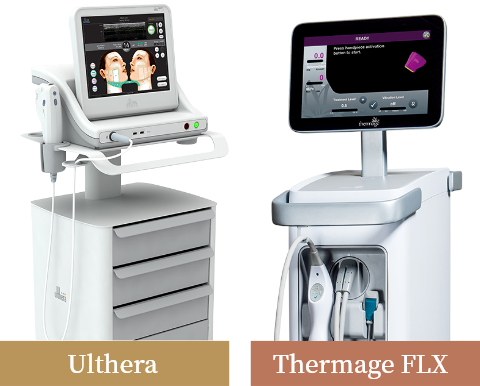
As we enter our late 30s and 40s, structural changes in our skin become more noticeable. Sagging along the jawline, a softening chin profile, and a loss of overall facial firmness can make us look tired, even when we feel energized and confident inside. If you are looking for non-surgical ways to restore a naturally youthful appearance, you have likely come across Ultherapy and Thermage. These two gold-standard, FDA-cleared devices are widely celebrated for their ability to rejuvenate the skin without incisions or downtime. However, they work in fundamentally different ways and address distinct aspects of facial aging. Understanding these differences is the key to investing your time and resources into the treatment that truly matches your unique concerns.
Struggling to Choose Between Ultherapy and Thermage, the Two Giants of Sagging Skin Treatment?
Many people find themselves at a crossroads when choosing between Ultherapy and Thermage. It is incredibly common to feel overwhelmed by the technical jargon, conflicting reviews, and the fear of making the wrong choice or experiencing unnatural results. The fundamental key to making the right decision lies in understanding that these two treatments are not competitors; rather, they are complementary therapies designed to target completely different layers of your facial anatomy.
Conclusion First! A Comparison Table Showing the Differences Between Ultherapy and Thermage
To help you understand the core differences quickly, here is a clear summary of how these two leading treatments compare. While both procedures stimulate your body’s natural collagen production to reverse signs of aging, they approach the skin from different depths and deliver different visual outcomes.
Ultherapy Key Features: Technology is High-Intensity Focused Ultrasound (HIFU). Target depth is 1.5mm, 3.0mm, and 4.5mm, reaching the deep SMAS muscle layer. Main effect is lifting loose skin, creating an effect similar to gently pulling your hair back into a high ponytail. Best suited for jawline sagging, cheek sagging, a double chin, and improving nasolabial folds. Average pain is a deep, bone-aching heat sensation, especially along the jawline. Downtime is minimal, with redness and swelling occurring only rarely. Results typically last around six months to one year, with treatment recommended once every six months to once a year. The typical cost for a full-face treatment is approximately ¥200,000 to ¥300,000.
Thermage Key Features: Technology is Monopolar Radiofrequency (RF). Target depth is the dermis through the shallow subcutaneous fat layer (approximately 2.4mm). Main effect is three-dimensional tightening, skin smoothing, and texture refinement. Best suited for overall facial sagging, loss of skin firmness, enlarged pores, and mild fine lines. Average pain is a hot, surface-level pinch immediately balanced by a built-in cooling system. Downtime is minimal, with redness and swelling occurring only rarely. Results typically last around six months to one year, with treatment recommended approximately once every six months. The typical cost for a full-face treatment is approximately ¥250,000 to ¥350,000.
What is Ultherapy, the “Lifting” Treatment?
Ultherapy is globally recognized as a premier non-invasive lifting treatment. It is specifically designed to counteract the effects of gravity on the lower face, neck, and brow line. By targeting the foundational structures of the face, it provides a subtle, natural upward pull that rejuvenates your profile without changing your inherent facial features.
How Ultherapy Works: Lifting the SMAS Fascia with Ultrasound (HIFU)
Unlike lasers or radiofrequency, which disperse energy over wider areas, Ultherapy uses micro-focused ultrasound waves. This energy passes harmlessly through the outer layers of your skin and converges at precise depths, specifically 1.5mm, 3.0mm, and 4.5mm. The deepest setting reaches the Superficial Muscular Aponeurotic System (SMAS), the sturdy membrane of muscle and connective tissue that surgeons lift during a traditional facelift. By heating these tiny target points to approximately 60 to 70 degrees Celsius, Ultherapy causes immediate tissue contraction and triggers a robust wound-healing response that produces fresh, resilient collagen over the coming months. Furthermore, practitioners utilize real-time ultrasound imaging to see exactly which layers of tissue they are treating, ensuring unparalleled safety and precision.
Expected Benefits of Ultherapy
The primary outcome of Ultherapy is a distinct upward lift. Many patients describe the effect as similar to gently pulling their hair back into a high ponytail. You can expect a more defined jawline, a reduction in the appearance of a double chin, a subtle lift of the eyebrows to open up tired-looking eyes, and a smoothing of moderate sagging on the neck. Because the treatment stimulates your own biology, these lifting effects appear gradually, making the transition look completely natural to those around you.
Ultherapy is Recommended for Those with These Concerns
Ultherapy is highly recommended for individuals who are starting to notice structural sagging in their lower face and neck. If you feel your jawline has lost its sharp definition, or if you notice drooping corners of the mouth and sagging skin beneath your chin, Ultherapy is an exceptional choice. It is also perfect for those who want to avoid surgical interventions and desire a long-lasting, deep-tissue lift with zero recovery downtime.
What is Thermage, the “Tightening” Treatment?
While Ultherapy focuses on pulling the structural foundation upward, Thermage is designed to shrink and tighten the skin envelope itself. It is a highly sophisticated treatment that addresses surface-level laxity, fine lines, and overall skin texture, helping your face feel firmer, smoother, and more compact.
How Thermage Works: Increasing Skin Collagen with Radiofrequency (RF)
Thermage, specifically the latest generation Thermage FLX, utilizes monopolar radiofrequency energy. This technology delivers bulk heating uniformly into the dermis and shallow subcutaneous fat layers. The heat causes existing collagen fibers to instantly contract, which provides an immediate, subtle tightening effect. Over the next several months, this thermal stimulation prompts fibroblasts to synthesize a wealth of new collagen and elastin. Thermage also features a sophisticated cooling mechanism that sprays a cooling gas onto the skin before, during, and after each energy pulse, protecting the epidermis and keeping the treatment as comfortable as possible.
Expected Benefits of Thermage
The main visual outcome of Thermage is a three-dimensional tightening and smoothing of the skin. It excels at reducing overall facial volume slightly, which can produce a noticeable slimming and contouring effect. Additionally, it minimizes the appearance of fine lines, crepey skin texture, and enlarged pores. Your skin will feel noticeably firmer to the touch, and makeup will glide on more smoothly due to the improved surface elasticity.
Thermage is Recommended for Those with These Concerns
Thermage is perfect for individuals experiencing mild to moderate skin looseness, superficial wrinkles, or a loss of overall skin elasticity. If you feel your skin has become soft, thin, or lacking in firmness — particularly if you carry some extra fullness around the cheeks and jawline that you would like to streamline — Thermage is designed precisely for you. It also works well for anyone bothered by enlarged pores, fine surface lines, or a general sense that the face has lost its youthful density. Because the effect tightens the skin from within, many patients notice a sharper jawline contour and a fresher, more youthful impression overall.
The 7 Key Differences Between Ultherapy and Thermage: A Doctor’s Detailed Comparison
Building on the comparison table above, let’s take a closer, doctor’s-eye look at seven specific ways Ultherapy and Thermage differ. Neither treatment is inherently “better” than the other — understanding what each one does well is the first step toward choosing the option that truly fits your concerns. This detailed comparison is designed to answer your remaining questions and give you the concrete information you need to make a confident decision.
Difference 1: The Core Effect — “Lifting” vs. “Tightening”
The most fundamental difference between Ultherapy and Thermage lies in the quality of the result each one produces. Ultherapy specializes in lifting: by firmly pulling up the SMAS fascia — the structural foundation beneath sagging skin — it moves the cheeks and jawline back toward their original position, working against the pull of gravity. Patients often notice tangible, almost mechanical changes, such as drooping corners of the mouth turning upward or a jawline that suddenly looks sharper. Think of it as re-erecting the pole of a sagging tent and hoisting the whole structure back into place.
Thermage’s primary strength, on the other hand, is tightening. By delivering heat energy into the dermis and subcutaneous fat layer, it draws the entire face inward and firms it from the inside out. This produces a visible improvement in skin firmness, less noticeable pores, and a cleaner, more defined facial outline. If Ultherapy is like resetting the tent pole, Thermage is like smoothing out the wrinkles in the tent’s fabric so the whole surface sits taut and even.
Difference 2: Treatment Depth — SMAS Fascia vs. Dermis and Subcutaneous Fat
These differing effects come down to how deep each device’s energy travels. Ultherapy uses High-Intensity Focused Ultrasound (HIFU) to deliver pinpoint heat at very specific depths — 1.5mm, 3.0mm, and 4.5mm — with the deepest setting reaching the SMAS fascia, the layer most responsible for structural sagging. This “deep and narrow” focus is what allows Ultherapy to lift the skin’s foundation from the ground up.
Thermage, by contrast, uses radiofrequency (RF) energy delivered through a mechanism called bulk heating, which spreads warmth evenly and broadly across the skin’s surface, through the dermis and into the shallow subcutaneous fat below. This “shallow and wide” approach contracts collagen fibers across a broad area and stimulates new collagen production throughout, resulting in overall tightening and improved firmness.
Difference 3: Best-Suited Areas and Treatment Range
Ultherapy and Thermage also differ in the areas and range they treat most effectively. Ultherapy delivers outstanding results in specific areas where age-related sagging is most visible — the jawline, under the chin, and the cheeks — making it especially well-suited for targeted, localized lifting thanks to its precise reach into the SMAS fascia.
Thermage, meanwhile, is often used to treat looseness and lost firmness across the entire face, as well as the neck, and — with a specialized eye tip — the fine lines and mild sagging around the eyes. Because its energy spreads broadly through the skin, Thermage is the better fit when the goal is comprehensive tightening and overall skin-quality improvement, including a reduction in facial volume and smaller-looking pores. Which treatment suits you best often comes down to exactly where your concerns are concentrated on your face.
Difference 4: Pain and Downtime
The pain and downtime involved in a procedure are naturally a major concern for many patients. Ultherapy’s discomfort is often described as a deep, bone-aching heat that radiates through the treatment area, most noticeable near bony areas like the jaw — this is a direct result of the energy reaching all the way to the SMAS fascia. Thermage feels different: patients typically describe a warm, gradual heat building beneath the skin’s surface, distinct from Ultherapy’s sensation.
Pain tolerance varies significantly from person to person, but there’s no need to worry — most clinics apply topical numbing cream, and devices like Thermage FLX are equipped with built-in cooling and vibration functions to keep discomfort to a minimum. As for downtime, both treatments can cause mild, temporary redness, swelling, or puffiness, but these effects typically resolve within a few hours to a few days. Patients can generally wear makeup immediately afterward, which is why both are known as true “no-downtime” treatments that don’t interfere with daily life.
Difference 5: Duration of Results and Recommended Frequency
How long results last, and how often you should repeat treatment, are important factors in planning your skincare routine. Ultherapy’s lifting effect isn’t instant — it builds gradually as new collagen forms, typically peaking around two to three months after treatment. The results are relatively long-lasting, generally holding for six months to a year, so most patients schedule follow-up sessions once every six months to a year.
Thermage can also produce a very mild degree of immediate tightening thanks to instant collagen contraction, but like Ultherapy, its full firming effect peaks around one to three months later. Results last roughly six months to a year as well. For patients aiming to maintain their results and see continued improvement in skin quality, treatment approximately once every six months is often recommended. As you weigh your options, it’s worth considering your long-term goals alongside your lifestyle and how often you’re able to visit the clinic.
Difference 6: Cost
Since these are elective cosmetic procedures, cost is naturally an important consideration. As a general guide, a full-face Ultherapy treatment typically ranges from about ¥200,000 to ¥300,000, while full-face Thermage FLX typically runs from about ¥250,000 to ¥350,000. These figures are only a general benchmark.
The actual price quoted by a clinic will vary considerably depending on the number of shots used, the treatment area (for example, the entire face versus just the area under the chin), the clinic’s own pricing policy, and any ongoing promotions. It’s important not to choose a clinic based on price alone — the cost of treatment should reflect the safety of the equipment used, the physician’s skill and expertise, and the quality of aftercare provided. Be sure to confirm exactly what is included in the quoted price during your consultation, and weigh the doctor’s expertise and the clinic’s reputation alongside the cost.
Difference 7: Side Effects and Risks
For your safety, it’s important to understand the potential side effects and treatment-specific risks associated with both Ultherapy and Thermage. Temporary side effects common to both treatments include redness, swelling, a warm sensation, and a mild, dull ache similar to muscle soreness. These are a natural response to the heat energy delivered into the skin and typically resolve on their own within a few days to about a week.
Ultherapy carries a rare but specific risk: because energy can occasionally be delivered near a nerve, some patients may experience temporary numbness or weakness in the treated area. Mild, welt-like swelling along the treatment lines has also been reported on rare occasions. Thermage, for its part, carries a very rare risk of thermal burns if the device’s settings are miscalibrated or energy is applied improperly.
Minimizing these risks and ensuring a safe, effective treatment depends entirely on being treated by an experienced physician who has a thorough understanding of facial anatomy and proper application technique. When choosing a clinic, be sure to look closely into the doctor’s experience and credentials, and confirm that the equipment being used is genuine.
Which Treatment Matches Your Concerns and Face Type?
We’ve now compared Ultherapy and Thermage from every angle — their basic mechanisms, treatment depth, duration of results, cost, and risks. With all of this in mind, let’s turn to something more personal: concrete guidance for figuring out which treatment is the better match for your own concerns.
Sagging in your 40s and beyond rarely comes from a single cause. Skin looseness, descending facial fat, and even subtle shifts in bone structure all interact in complex ways. That’s why taking an honest look at where your main concerns lie, and what your face shape and structure are like, is so important when choosing the right treatment.
Ultherapy May Be Right for You If…
● You want to fundamentally lift sagging along your jawline.
● You’ve noticed your cheeks dropping over the years, giving your face a longer, flatter appearance.
● You have relatively little facial fat and tend to look somewhat gaunt, but sagging is still a concern.
● You want to lift the tissue that overhangs your nasolabial folds, making them appear shallower.
● You’d like to avoid surgery but still want a strong, noticeable lifting effect.
● You want to address sagging at its source — the SMAS fascia — rather than just the surface.
Because Ultherapy works directly on the SMAS fascia — the root cause of structural sagging — patients looking for a true lift from the foundation up tend to find it especially satisfying.
Thermage May Be Right for You If…
● Your whole face feels like it’s lost its firmness and looks generally looser than before.
● You have a rounder or fuller face, with extra fullness around the cheeks and jawline that you’d like to streamline.
● Your nasolabial folds or marionette lines have deepened and you suspect skin laxity is the cause.
● You want to improve overall skin quality, including enlarged pores and rough texture, at the same time.
● You’re bothered by fine lines or slight lid drooping around the eyes (when using the specialized eye tip).
● You want to firm the skin from the surface down to the deeper layers for a natural, overall refreshed look.
By acting on the dermis and subcutaneous fat layer, Thermage helps reduce overall facial volume, tighten the skin, and improve texture, all at the same time.
A Quick Self-Check: Are You an “Ultherapy Face” or a “Thermage Face”?
Try this simple self-check to get a sense of which treatment might suit you better.
Stand in front of a mirror and use your fingers to gently lift the skin at your temples and cheekbones diagonally upward. If this “lifted” position looks close to the jawline and cheek position you’d love to have, Ultherapy’s strong lifting effect may be the better fit for you.
Next, gently pinch the skin under your cheeks and jaw between your fingers. If you notice a fair amount of fat thickness, feel that your face has lost overall volume control, or sense a general lack of elasticity, Thermage — which works on the fat layer and dermis — may be more effective for your needs.
Keep in mind that this self-check is only a rough guide. The cause and degree of sagging differ from person to person, so it’s essential to have a proper consultation and examination with a qualified physician before making your final decision. Be sure to share your skin concerns and desired outcome with your doctor so they can recommend the treatment plan that’s right for you.
Want Even More Dramatic Results? Consider Combining Ultherapy and Thermage
For patients who feel that a single treatment alone doesn’t go far enough, there’s another option: combining Ultherapy and Thermage in a single treatment plan.
Because these two treatments act on different layers of the skin, combining them allows you to achieve both lifting and tightening at once, creating a synergistic effect. This more comprehensive approach is especially well-suited to the layered, multi-factorial sagging concerns that tend to emerge in your 40s and beyond, which is why so many patients are drawn to it.
The Benefits of Combining Lifting and Tightening in One Session
The single greatest advantage of combination treatment is that it addresses every layer of the face, from the surface down to the deepest structural tissue. Ultherapy firmly lifts the SMAS fascia — the skin’s foundational layer — while Thermage then tightens the dermis and subcutaneous fat above it, producing a result that’s more three-dimensional and natural-looking than either treatment could achieve alone.
For example, combination treatment can simultaneously address sagging, an overall lack of skin firmness, enlarged pores, and fine lines, delivering a higher level of satisfaction through this synergistic effect.
Who Should Consider Combination Treatment?
Combination treatment is particularly worth considering if you:
● Are concerned about jawline sagging but also want to improve overall skin firmness and fine lines at the same time
● Have tried one treatment on its own before and felt the results fell short of your expectations
● Want to achieve the maximum possible improvement in a single course of treatment, even if it means investing more time and cost
● Are in your 40s, 50s, or beyond and are dealing with a combination of sagging, excess fat, and declining skin quality all at once
If your concerns span multiple layers of the face, combination treatment is a highly effective way to address them comprehensively.
Frequently Asked Questions Before Your Treatment
Ultherapy and Thermage are both extremely popular sagging treatments, but it’s completely natural to have questions and concerns before actually undergoing a procedure. Below, we answer some of the most common questions we hear from patients, in plain language, so you can feel confident and well-informed going into your treatment.
Q. When Will I See Results?
Ultherapy and Thermage differ slightly in how quickly their effects appear.
Thermage can produce a noticeable tightening effect right after treatment, thanks to the instant contraction of collagen fibers from the heat. However, its full effect peaks around one to three months later, once new collagen has been generated and remodeled by the thermal stimulation. During this period, skin firmness and elasticity gradually improve, giving the face a more lifted, tightened appearance.
Ultherapy’s immediate changes are typically less dramatic than Thermage’s. Because the ultrasound energy works on the SMAS fascia and the tissue needs time to remodel itself, it takes a bit longer to notice results. Generally, the lifting effect builds gradually over two to three months after treatment, reaching its peak around that time. Results vary from person to person for both treatments, so it’s best to be patient and give your skin time to fully respond.
Q. Is Anyone Not a Candidate for These Treatments?
Ultherapy and Thermage are both considered very safe procedures, but they aren’t suitable for everyone. To prioritize your safety above all else, the following individuals should not receive treatment, or should only do so after careful evaluation by a physician:
● Those who are pregnant or breastfeeding
● Those with metal threads, plates, silicone, or other foreign materials implanted in the treatment area
● Those with a cardiac pacemaker or implantable defibrillator
● Those with severe skin disease, infection, or dermatitis in the treatment area
● Those prone to keloid scarring
● Those with an underlying condition, such as diabetes or a connective tissue disease, that may affect wound healing
If you have any other pre-existing conditions or are currently taking medication, please be sure to disclose this to your doctor during your consultation. Accurately sharing your health status and medical history is the first step toward a safe and satisfying treatment experience.
Q. Should I Insist on Genuine Ultherapy or Thermage Devices?
Yes — to ensure both safety and reliable results, it’s essential to choose a clinic that uses only genuine, authentic Ultherapy or Thermage devices. In recent years, unfortunately, some clinics offering low-cost treatments marketed as “Ultherapy” or “Thermage” have actually been using unapproved imitation devices, including so-called generic HIFU machines.
Genuine Ultherapy and Thermage devices have undergone research and clinical trials overseas; Ultherapy, for example, has been cleared by the U.S. Food and Drug Administration (FDA) for lifting purposes. That said, it’s worth understanding that even these genuine devices are not approved in Japan by the Pharmaceuticals and Medical Devices Agency (PMDA); they are used in Japan as elective, out-of-pocket treatments imported directly by physicians for personal medical use, and are not covered by public health insurance. Imitation devices, on the other hand, often have unstable energy output and can carry serious risks, including burns, nerve damage, and skin breakdown, in addition to simply failing to deliver the results you’re expecting.
When choosing a clinic, always confirm — through the clinic’s official website or directly with staff — that it uses authentic equipment sourced through official manufacturer channels. This is a non-negotiable condition for safe treatment, so make sure to prioritize the reliability of the equipment being used rather than choosing based on price alone.
Q. What Should I Keep in Mind After Treatment?
Both Ultherapy and Thermage involve very little downtime, but how you care for your skin afterward can affect both how long your results last and your skin’s overall condition. Here are a few key points to keep in mind following treatment:
● Avoid anything that increases blood flow. On the day of treatment, avoid long baths, saunas, strenuous exercise, and excessive alcohol consumption, as increased blood flow can temporarily intensify redness and swelling. Showering is perfectly fine.
● Moisturize thoroughly. Your skin is temporarily more sensitive and prone to dryness after treatment due to the heat energy applied. Be sure to moisturize more diligently than usual to support your skin’s barrier function.
● Protect your skin from UV exposure. Sun exposure accelerates skin damage and increases the risk of pigmentation. In addition to applying sunscreen, be thorough about additional sun protection measures such as wearing a hat or using a parasol.
● Avoid unnecessary friction or stimulation. Refrain from strongly rubbing or massaging the treated area. Be sure to handle your skin gently and with care.
Following these guidelines will help you get the most out of your treatment and maintain beautiful, healthy-looking skin for longer.
Three Key Points for Choosing the Right Clinic
When considering sagging treatment, the effectiveness and safety of Ultherapy and Thermage depend heavily on which clinic you choose. For anyone in their 40s who values trustworthiness, peace of mind, and safety, choosing the right clinic wisely is absolutely essential. Here, we walk through three critical points to look for so you don’t end up with any regrets.
Point 1: Does a Doctor Provide the Consultation and Diagnosis?
The single most important factor in choosing a clinic is whether a physician personally conducts a thorough consultation and diagnosis. In cosmetic medicine, it’s not uncommon for counselors or non-medical staff to explain the treatment details, but the final diagnosis and treatment plan should always be determined by a licensed doctor.
A trustworthy physician will begin by carefully examining your skin condition, the underlying cause of your sagging (whether fat, skin laxity, muscle weakness, or a combination), and your overall facial bone structure. From there, they should be able to clearly and logically explain why Ultherapy, Thermage, or a combination of both is the best fit for your specific concerns. A doctor who is upfront about potential risks and side effects, not just the benefits, is the kind of specialist you can trust with confidence.
Point 2: Does the Clinic Use Genuine Devices and Have Extensive Experience?
To achieve safe, reliable results, it’s essential that the clinic uses authentic Ultherapy or Thermage FLX devices sourced directly through official manufacturer channels. Unfortunately, unapproved imitation devices do exist on the market, and these carry serious risks, including burns and nerve damage, in addition to simply underperforming.
Once you’ve confirmed that a clinic uses genuine equipment, it’s equally important to choose a physician with extensive hands-on experience using that specific device. An experienced doctor has the skill and judgment to fine-tune energy settings based on your skin’s thickness and response in real time, maximizing results while minimizing risk. We recommend reviewing the doctor’s background and case photos, which are often available on the clinic’s official website.
Point 3: Is Pricing Transparent and Aftercare Solid?
Transparency around cost, along with peace of mind after your procedure, are both essential factors in choosing the right clinic. During your consultation, choose a clinic that clearly explains exactly what’s included in the quoted price — treatment fees, anesthesia, and any medication — and confirms upfront whether any additional charges might apply later. An unclear pricing structure can easily become a source of trouble down the road.
It’s also worth confirming the strength of the clinic’s aftercare system: if you experience unexpected swelling, pain, or any other concern after treatment, will you be able to see a doctor promptly, and does the clinic have a properly functioning contact line for questions or concerns? Choosing a clinic that continues to support you even after your treatment is complete is essential for peace of mind.
Conclusion: Choose the Treatment That Matches Your Concerns for Smart, Youthful Aging in Your 40s
We’ve taken a detailed look at Ultherapy and Thermage, the two leading names in non-surgical sagging treatment. By now, you likely have a clear sense of what sets them apart: Ultherapy uses High-Intensity Focused Ultrasound (HIFU) to lift the SMAS fascia, while Thermage uses radiofrequency (RF) energy to tighten the dermis and subcutaneous fat layer — each with its own strengths and mechanism of action.
Both treatments are excellent options for addressing the jawline sagging and loss of firmness that naturally become more noticeable with age, helping restore a more youthful appearance. However, neither one is universally “better” for everyone. What matters most is considering the underlying cause of your sagging, the areas that concern you most, the results you’re hoping to achieve, and your own lifestyle, then choosing the approach that’s the best fit for you personally.
We hope the information in this article brings you one step closer to the results you’re looking for. When it’s time to make your final decision, we encourage you to use the “three points for choosing a clinic” covered above as a guide, and to consult a trusted specialist with deep anatomical knowledge and a strong track record of cases. Through a careful, thorough consultation with your doctor, you can find the treatment plan that truly matches your skin and your concerns — and take a confident step toward a brighter, more radiant future.
監修医師

院長大河原 萌乃
経歴
- 2018
- 杏林大学医学部卒業
- 2018
- 東京女子医科大学病院にて皮膚科、麻酔科、形成外科などを経験
- 2020
- 某大手美容クリニックに入職しレーザー治療、ボトックス注射、ヒアルロン酸注入、また埋没や目の下のくまとり、糸リフトなどの手術も数多く経験
- 2023
- 某大手美容クリニックのスキン院長を歴任
- 2023
- MATSURIKA CLINIC GINZA(茉莉花クリニック銀座) 入職
所属学会
- 日本美容外科学会、日本抗加齢医学学会、日本レーザー医学会、日本医学脱毛学会
- アラガン施注資格認定医
- ジュビダームビスタ認定医
- ジュビダームビスタボリフトXC認定医
- ジュビダームビスタボリューマXC認定医
- ジュビダームビスタボライトXC認定医
- ウルセラ認定医
- サーマクール認定医
